
Connecting pipes to equipment like valves is tough. Welding seems necessary but is complex and costly, causing project delays. A flange adaptor offers a simple, weld-free alternative.
A flange adaptor is a mechanical joint that connects a plain-ended pipe to a flanged component, like a valve or pump. It works by tightening the bolts to apply opposite forces between the end ring and the flange body. This compresses the gasket between them, allowing it to deform and fill the gap between the adaptor and the pipe, to create a secure, leak-proof seal without welding, making installation faster and easier on-site.
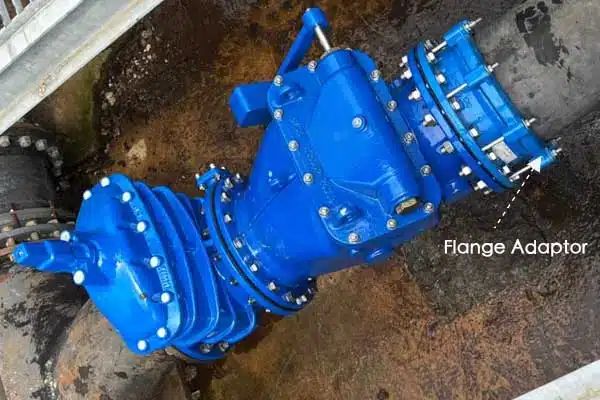
It seems simple, but choosing the right one is key for a successful project. This guide will walk you through everything, from the basic functions to advanced installation tips. I want to share my 30 years of manufacturing experience to help you ensure your pipeline connections are safe and reliable. Let's dive in and explore how this essential fitting can make your job easier.
What is a Flange Adaptor and How Does It Work?
You have a plain pipe and a flanged valve, but how do you join them? This common mismatch can stop your project cold. You need a simple, reliable way to connect them.
A flange adaptor connects a plain pipe end to a flanged fitting. It works by compressing a gasket around the pipe with an end ring and flange body by tighting bolts , creating a seal. This creates a strong connection without needing to thread or weld the pipe.
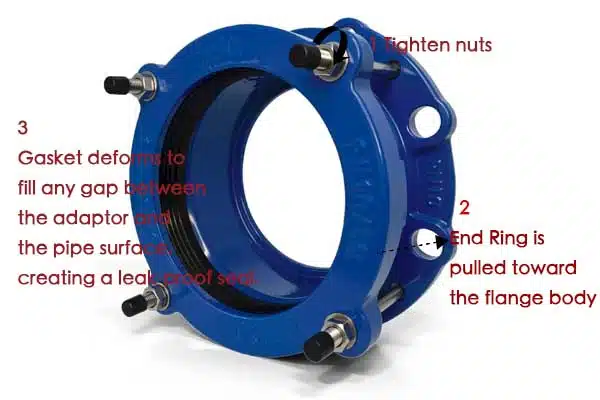
A flange adaptor might look like one piece, but it is actually a clever assembly of four main parts. Understanding how they work together is the first step to using them correctly. Based on my experience designing these fittings, each part has a critical job.
The Four Key Components
Here is a breakdown of how a flange adaptor creates a secure, sealed joint:
| Component | Function |
|---|---|
| Flange Body | This is the main part with a standard flange drilling pattern (like EN1092 or ANSI). It bolts directly to the flange of your valve, pump, or meter. |
| End Ring | Located at the opposite end, this ring is pulled toward the flange body by the bolts. It applies pressure evenly onto the gasket. |
| Gasket | This rubber seal sits between the flange body and the end ring. When compressed, it deforms to fill any gap between the adaptor and the pipe surface, creating a leak-proof seal. |
| Bolts & Nuts | These fasteners are what make everything work. As you tighten them, they draw the end ring and flange body together, compressing the gasket to achieve the seal. |
This mechanical design also gives you some flexibility. The connection allows for small length adjustments during installation, which is a huge help when pipes are not cut to a perfect length. Our flange adaptors at Judberd also allow for up to ±3° of angular deflection, helping you manage minor pipe misalignment without stressing the joint.
Restrained vs. Non-Restrained: Which Flange Adaptor Do You Need?
Your pipeline is under pressure, creating strong forces. A standard connection might not hold, risking pipe pull-out and catastrophic failure. You need a joint that can handle this internal stress.
Choose a restrained flange adaptor for above-ground pipes or any line without proper anchoring to prevent pull-out from pressure. For fully buried pipes with good soil support, a non-restrained adaptor is usually sufficient. Always check your project's specific needs.
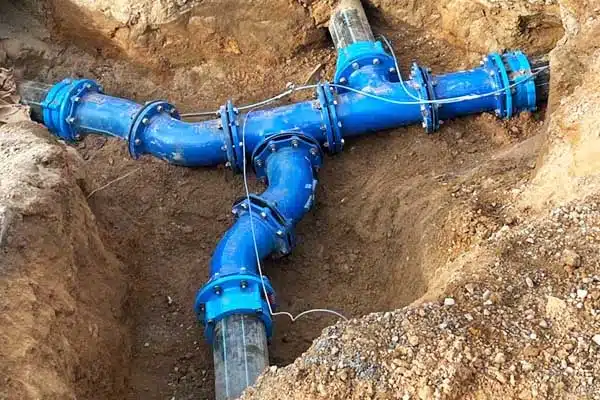
The water or other medium inside your pipe creates a powerful axial thrust force , constantly trying to push the pipe out of the joint. Other factors like ground movement or temperature changes add even more stress. If these forces are not controlled, the pipe can slip out, causing a major leak.
This is why we always ask our customers about their application before recommending a product. The choice between a restrained and non-restrained adaptor is critical for safety.
Making the Right Choice
Here is how we advise our clients:
- Non-Restrained Adaptors : These are perfect for pipelines that are buried and properly backfilled. The surrounding soil provides a natural anchor, or "thrust block," that resists the axial forces. The adaptor's job is simply to seal the connection.
- Restrained Adaptors : You must use these when the pipe isn't anchored. This includes above-ground installations, pipes in casings, or any situation where the working pressure is over 6 bar without effective thrust blocks. These adaptors have a built-in gripping mechanism to hold the pipe and prevent pull-out.
One exception is HDPE pipe. Because it's flexible and has a smooth surface, it can "creep " or slide through the soil. For HDPE, we always recommend a restrained flange adaptor, even in buried applications, to guarantee a secure connection.
Flange Adaptor vs. Other Connections: Why Go Weld-Free?
Welding connections is time-consuming and needs skilled labor. This slows down your project and increases costs, especially in remote or difficult locations. There has to be a better, faster way.
Flange adaptors offer a mechanical, weld-free connection. This is faster to install, requires less specialized labor, and allows for disassembly. Unlike welding, it's ideal for repairs, retrofitting, and connecting dissimilar pipe materials without special procedures.
In my 30 years of manufacturing pipe fittings, I have seen projects get delayed for weeks waiting for a certified welder or for the right weather conditions for "hot work." Mechanical connections like flange adaptors solve these problems. They provide a robust and reliable joint without any of the complexities of welding.
Mechanical vs. Welded Connections
Let’s compare the two approaches directly. While both can create a strong connection, their differences in installation and flexibility are huge.
| Feature | Mechanical Connection (Flange Adaptor) | Welded Connection |
|---|---|---|
| Installation Speed | Fast. Can be done in minutes with basic tools. | Slow. Requires extensive prep, welding time, and cooling. |
| Required Skills | Basic mechanical skills. No special certification needed. | Requires a certified welder and often a "fire watch." |
| Flexibility | High. Allows for disassembly, adjustment, and reuse. | Low. The connection is permanent and must be cut for removal. |
| Site Conditions | Can be installed in wet or confined spaces. No hot work permits. | Requires dry conditions and safety measures for sparks and fumes. |
| Material Transition | Easy. Connects different materials like steel to DI without issue. | Difficult. Joining dissimilar materials requires special procedures. |
A common point of confusion is the difference between a flange adaptor and a coupling. A coupling is used to join two plain-ended pipes together. A flange adaptor is specifically designed to join a plain-ended pipe to a flanged component, like a valve or pump. They solve different problems.
When Should You Use a Flange Adaptor in Your Pipeline?
You need to connect a new pump or valve to an existing pipeline. Cutting and welding is disruptive and risky. You need a connection method that minimizes downtime and complexity.
Use a flange adaptor whenever you need to connect a plain-end pipe to a flanged component. It's perfect for installing valves and pumps, retrofitting new equipment to old pipelines, and creating transition points in a water distribution network.
Flange adaptors are one of the most versatile fittings in our factory's portfolio. Their simple, effective design makes them the go-to solution for many common pipeline challenges. I have seen our products used in everything from municipal water systems to industrial processing plants.
Here are some of the most common applications where a flange adaptor is the best choice:
Connecting to Valves and Pumps
This is the primary job of a flange adaptor. Almost all industrial valves, pumps, and water meters come with flanged ends. A flange adaptor provides the perfect bridge between the flanged equipment and the plain-ended pipe of your pipeline. You simply bolt the adaptor's flange to the equipment's flange.
Retrofitting and Repairs
Imagine you need to replace an old, failing valve. The new valve might be slightly shorter or longer than the old one. With a welded connection, this would be a major headache. With a flange adaptor, it's easy. The adaptor's ability to slide along the pipe provides the axial adjustment needed to close the gap, saving you from having to cut and fit a new piece of pipe.
Creating Transition Points
Flange adaptors are also excellent for joining pipes made of different materials. For example, you can easily connect a ductile iron pipe to a flanged steel valve. The mechanical seal works effectively on a wide range of pipe materials, making it a universal connector. This is especially useful in water pipelines where ductile iron pipes are common.
How Do You Connect Different Pipe Materials with a Flange Adaptor?
Connecting a flexible HDPE pipe is different from connecting a rigid steel pipe. Using the wrong restraint method can lead to leaks or pull-out. You need to know the specific requirements for each material.
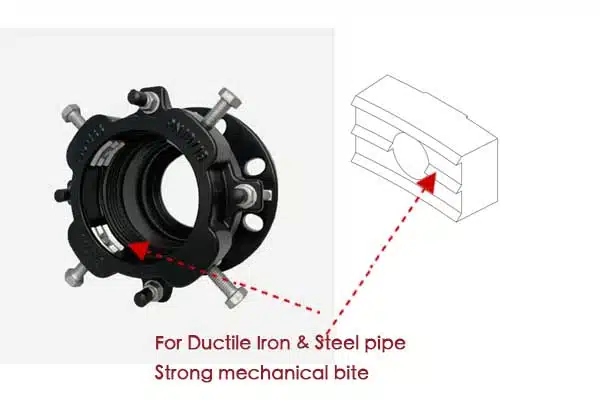
**For rigid pipes like ductile iron or steel, toothed grip wedges provide strong mechanical restraint.
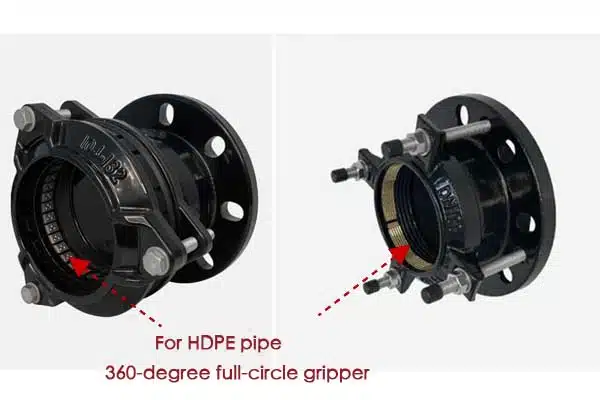
For flexible HDPE pipes, a 360-degree full-circle gripper is essential to prevent creep and ensure a lasting seal, even when buried.**
As a manufacturer with our own R&D department, we have spent years perfecting restraint systems for different pipe materials. A one-size-fits-all approach does not work. The properties of the pipe dictate the design of the restraining mechanism.
Restraint Systems by Pipe Material
| Pipe Material | Key Challenge | Our Recommended Solution |
|---|---|---|
| Ductile Iron & Steel | Rigid, hard surface. Requires a strong mechanical bite. | We use sharp, tough ductile iron grip wedges. These wedges dig into the pipe surface as the bolts are tightened, creating an incredibly strong grip that can handle pressures up to PN25. |
| HDPE | Flexible, smooth surface, prone to "creep" under load. | A 360-degree full-circle gripper is used. This system spreads the gripping force around the entire pipe circumference, preventing the pipe from deforming or slipping over time. |
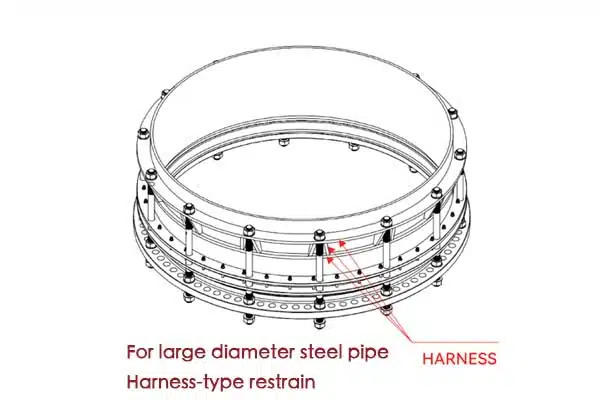
| Large Diameter Steel | Massive axial forces, stability is paramount. | For pipes over DN1500, we recommend a harness-type restraint. This involves welding a harness onto the pipe and using tie rods connected to the adaptor. It offers maximum stability for critical main pipelines. |
I remember a client who needed to restrain a DN3800 steel pipe for a major water transmission line. We designed a custom harness with tie rods. While it required on-site welding for the harness, the stability and low long-term maintenance made it the best solution. For main arteries of a water system, you can't compromise on stability.
How Do You Choose the Right Flange Adaptor for Your Project?
Choosing the wrong adaptor can lead to leaks or even catastrophic failure. With so many options for material, pressure, and standards, making the right choice is critical for safety and reliability.
First, match the pressure rating (e.g., PN16, PN25) to your system's needs. Choose ductile iron for pressures up to PN25 and steel for higher pressures or very large diameters (>DN2000). Always confirm the flange drilling standard (e.g., EN1092, ANSI).
Selecting the right flange adaptor involves more than just matching the pipe diameter. As a supplier to major brands and engineering firms, we guide our customers through a few key technical details to ensure they get a fitting that is both safe and cost-effective.
Here is a quick guide to making the right choice:
1. Pressure Rating (PN)
The pressure rating, or PN (Pression Nominale), tells you the maximum pressure the fitting can safely handle in bar. Common ratings for water pipelines are PN10, PN16, and PN25. Always choose an adaptor with a PN rating equal to or greater than your pipeline's maximum operating pressure.
2. Material: Ductile Iron vs. Steel
- Ductile Iron: This is the workhorse for most water applications. It offers excellent strength and corrosion resistance at a competitive cost. It is the perfect choice for systems with pressures up to PN25.
- Fabricated Steel: When pressures exceed PN25, ductile iron is no longer suitable. You must switch to a steel flange adaptor. We also recommend steel for very large diameters (over DN2000), even at lower pressures. The cost to create a ductile iron mold for such a large, low-demand size is extremely high, making fabricated steel the more practical solution.
3. Flange Standard
This is a detail that is easy to miss but critical. The flange on the adaptor must have the same drilling pattern as the flange on your valve or pump. The two most common standards are EN1092-2 (used widely in Europe) and ANSI B16.5 (common in the US). If they don't match, the bolt holes won't line up.
How Do You Install a Flange Adaptor Correctly?
A poor installation can ruin a perfectly good fitting. Misalignment or incorrect torque can cause leaks and long-term problems, wasting time and money on repairs and call-backs.
Cut the pipe square, clean it, and mark the insertion depth. Slide the end ring and gasket on, then the body. Align with the flanged equipment, insert bolts, and tighten them in a star pattern to the specified torque value.
A successful, leak-free connection is all in the details of the installation. I have seen installers get 90% of it right, but a small mistake can lead to a big problem. Follow these steps carefully for a perfect installation every time.
Step-by-Step Installation Guide
- Prepare the Pipe: Cut the pipe end perfectly square. Use a file to remove any burrs from the inside and outside edge. Clean the pipe surface thoroughly where the gasket will sit. Any dirt or grease can compromise the seal.
- Mark the Pipe: Check the manufacturer's data sheet for the correct insertion depth. Measure this distance from the pipe end and mark it clearly. This ensures the pipe is inserted far enough into the adaptor.
- Assemble Components: Slide the end ring onto the pipe first, followed by the gasket. Make sure the gasket's tapered edge faces the adaptor body. A little water-based lubricant on the gasket can help it slide on smoothly.
- Position the Body: Slide the flange adaptor body over the pipe end until it reaches your mark.
- Align and Bolt: Position the pipe and adaptor so the flange holes align with the mating flange on the valve or pump. Insert all bolts and hand-tighten the nuts.
- Torque the Bolts: This is the most critical step. Use a torque wrench to tighten the bolts in a star or cross pattern. This ensures the pressure on the gasket is applied evenly. Tighten in stages (e.g., to 50% torque, then 100%) until you reach the manufacturer's specified torque value.
A note on misalignment: Our adaptors allow for about ±3° of deflection. This helps with minor issues, but you should always try to align the pipes as well as possible before tightening. Proper pipe supports are essential.
Why Do Flange Connections Fail and How Can You Prevent It?
You've installed everything, but the connection is leaking or the pipe has slipped. This is frustrating and dangerous, causing project shutdowns. You need to understand the cause to prevent it.
Failures often stem from uncontrolled axial forces causing pipe pull-out, incorrect bolt torque leading to leaks, or using the wrong gasket. Prevent this by choosing a restrained adaptor when needed, following torque specs, and ensuring all components are compatible and clean.
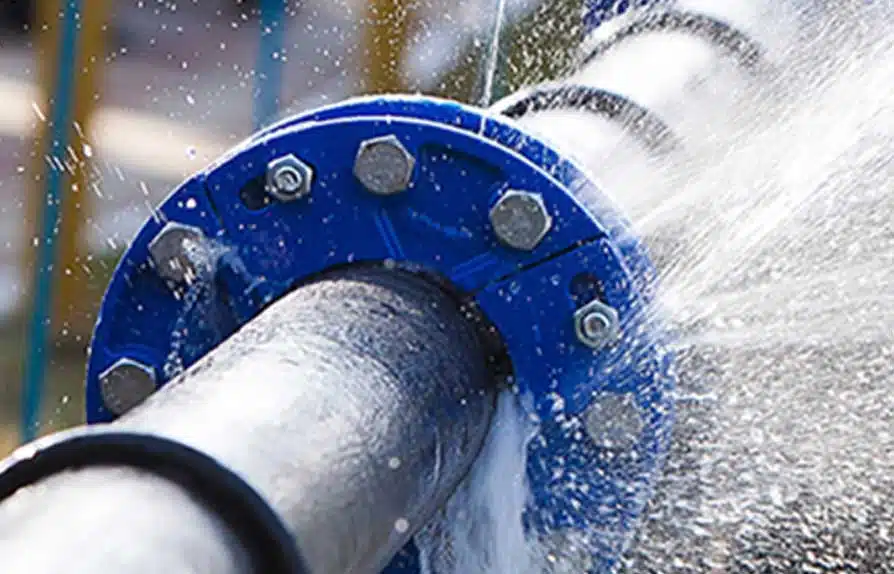
Over the years, our technical team has helped customers troubleshoot countless connection issues. Almost all failures come down to one of a few common root causes. Understanding these can help you prevent them from happening in the first place.
Common Failure Modes and How to Prevent Them
1. Pipe Pull-Out
- Cause: This happens when the axial thrust force inside the pipe is greater than the frictional hold of a non-restrained joint. It's the most dangerous type of failure.
- Prevention: The solution is simple: use a restrained flange adaptor. If you have any doubt about whether the pipeline is properly anchored by thrust blocks, especially in above-ground installations, always choose a restrained fitting. It's a small extra cost for a huge increase in safety.
2. Leaks at the Gasket
- Cause: Leaks are most often caused by uneven compression of the gasket. This happens when bolts are not tightened in a star pattern or when a torque wrench is not used. Dirt on the pipe surface or a damaged gasket can also be the culprit.
- Prevention: Always clean the pipe and gasket before assembly. And I can't stress this enough: use a torque wrench and tighten in a star pattern. This guarantees the end ring applies even pressure all the way around the gasket.
3. Misalignment Stress
- Cause: If the pipes are severely misaligned, it puts constant stress on the adaptor. While the fitting has some flexibility, excessive angular deflection can deform the gasket and lead to a slow leak over time.
- Prevention: Support your pipes properly. Ensure the alignment is as straight as possible before you begin tightening the bolts. The adaptor's flexibility is there to accommodate minor field imperfections, not to fix major installation errors.
Conclusion
A flange adaptor is a versatile, weld-free solution for connecting pipes to equipment. Choosing the right type and installing it correctly ensures a safe, reliable, and long-lasting pipeline connection.
