
Connecting old and new sewer pipes can be a real headache. Mismatches in size or material can cause major leaks and project delays. This guide shows you how to do it right.
The best way to connect different sewer pipes is by using a flexible coupling . This type of fitting is designed to create a secure, leak-proof seal between pipes of different materials, diameters, and even slight misalignments, without needing any special tools or welding.
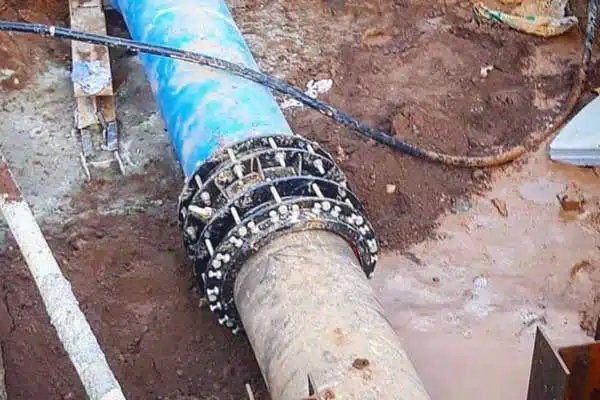
Joining old and new pipes is a common task in any water system upgrade or repair. But it is not as simple as just pushing two pipes together. You often face pipes made decades apart, from totally different materials and with different dimensions. Getting this connection wrong can lead to serious problems down the line, including costly leaks and environmental damage. But don't worry. I have been in this business for 30 years, and I've seen every possible pipe connection challenge. In this guide, I will walk you through the best methods and tools to make sure your connection is secure, durable, and trouble-free. Let's dive into the specifics.
What's the best way to connect old sewer pipes to new systems?
Old pipes meeting new systems can be a nightmare. Mismatched materials and sizes often lead to leaks. We have a simple solution to ensure a perfect fit every time.
The best method is using flexible couplings. They adapt to different pipe materials, diameters, and slight misalignments. This provides a durable, watertight connection without complex procedures like welding or custom fabrication.
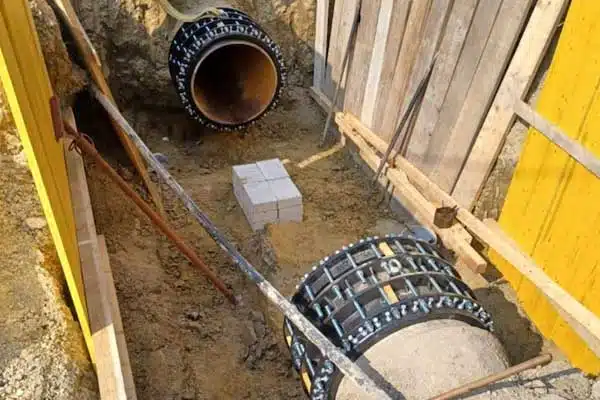
When you're connecting a modern PVC pipe to an old ductile iron line, a rigid connection just won't work. The old pipe might be worn, slightly out of round, or settled over time. A rigid connection, like a flange or a welded joint, demands perfection. It needs the pipes to be perfectly aligned and have exact matching diameters. This is rarely the case in the real world, especially in repair situations.
This is where flexible couplings shine. They are designed for imperfection.
How Flexible Couplings Work
A flexible coupling consists of three main parts:
- A Rubber Gasket: This is the heart of the coupling. It's specially designed to create a tight seal around the outside of both pipes, even if the surfaces are rough or uneven.
- 2 end rings and 1 center sleeve: This is usually made from ductile iron or steel. The center sleeve and the two end glands form a chamber that compresses the rubber gasket. When the bolts are tightened, the center sleeve and the end glands squeeze the gaskets at both ends, causing them to deform.
- Bolts: When you tighten the bolts, the 2 end rings and 1 center sleeve compresses the rubber gasket, forcing it to create a powerful, leak-proof seal against the pipes.
This design allows the connection to absorb vibration, ground movement, and temperature changes. The pipes can expand and contract without stressing the joint, which is a major cause of failure in rigid systems. At our factory, we've supplied these couplings for thousands of projects, and they consistently prove to be the most reliable and cost-effective solution.
What are the common challenges when connecting old and new sewer pipes?
Joining old and new pipes seems simple, but it is full of hidden problems. These issues can lead to costly failures. Let's uncover and solve them together.
The biggest challenges are mismatched materials (like PVC to DI), different outside diameters (OD), pipe misalignment, and angular deflection. These issues can compromise the seal and lead to leaks if not addressed properly.
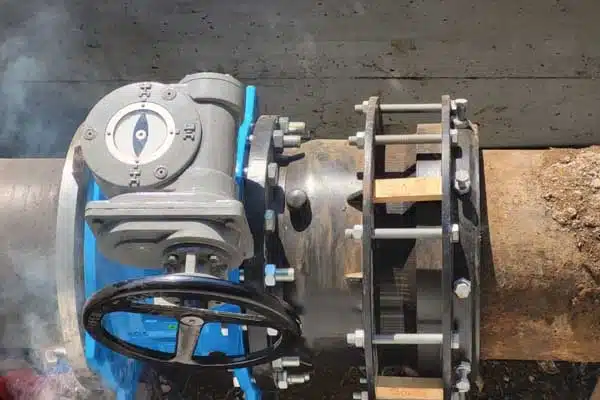
Over my 30 years in this industry, I've seen contractors struggle with the same set of problems again and again when joining old and new sewer lines. Understanding these challenges is the first step to overcoming them. A connection is only as strong as its weakest point, and these issues create significant weak points if you're not prepared.
Let's break down the most common challenges you'll face on a job site.
Key Connection Challenges
| Challenge | Description | Why It's a Problem |
|---|---|---|
| Different Materials | Connecting materials like Ductile Iron (DI) to PVC, or Asbestos Cement (AC) to HDPE. | Each material has a different surface texture, hardness, and thermal expansion rate. A standard gasket may not seal effectively on all surfaces. |
| Different Diameters | Pipes may have the same nominal size (e.g., DN150) but different actual outside diameters (OD). | A standard coupling is designed for a specific OD. If the difference is too large, the gasket won't seal properly, leading to leaks. |
| Pipe Misalignment | The centerlines of the two pipes are not perfectly aligned. This can be parallel or angular. | Forcing misaligned pipes into a rigid connection creates stress. This stress can fracture the pipe or the joint over time, especially with brittle, old pipes. |
| Pipe Condition | The old pipe may be corroded, pitted, or out-of-round. | An uneven or damaged pipe surface makes it very difficult for a gasket to create a uniform, watertight seal all the way around. |
Ignoring any of these issues is a recipe for disaster. A failed sewer connection is not just a leak; it's a public health hazard and a very expensive problem to dig up and fix. The key is to use a connection method that is specifically designed to handle these real-world imperfections.
Is a coupling or a flange better for sewer pipe connections?
Choosing between couplings and flanges is a critical decision for your sewer project. The wrong choice means leaks and rework. Find out which one is right for you.
For connecting old and new sewer pipes, flexible couplings are almost always better. They are faster to install, accommodate pipe imperfections, and don't require perfectly aligned bolt holes like flanges. Flanges are rigid and less forgiving.
Both flanges and couplings are used to join pipes, but they work in very different ways. Choosing the right one depends on the situation, especially when dealing with old infrastructure. A flange connection involves bolting two flat-faced rings together with a gasket in between. It creates a very strong, but very rigid, joint. A flexible coupling, as we've discussed, uses a compressive seal that allows for movement.
For sewer lines, especially when connecting old to new, the choice becomes clear when you compare them side-by-side.
Coupling vs. Flange: A Head-to-Head Comparison
| Feature | Flexible Coupling | Flange Connection |
|---|---|---|
| Flexibility | Excellent. Absorbs movement and vibration. | Poor. Creates a rigid joint that transfers stress. |
| Installation Speed | Fast. Installs in minutes with one tool. | Slow. Requires aligning bolt holes, tightening multiple bolts. |
| Tolerance | High. Works with misalignment and OD differences. | Low. Requires perfect alignment and matching faces. |
| Application | Ideal for repairs, transitions, and underground lines. | Best for connecting to pumps, valves, or in new, stable systems. |
| Failure Mode | Gradual weeping if under-torqued. | Catastrophic failure (cracked flange) if over-stressed. |
I remember a project where a contractor insisted on using flanges to connect a new pump station to an old main sewer line. The ground settled slightly after a few months of operation. The stress was too much for the rigid flange connection on the old cast iron pipe, and it cracked. They had to shut down the system, excavate the area, and replace the entire section. If they had used a flexible coupling, it would have simply absorbed the movement, and the connection would still be secure today.
Should you use flexible or rigid connections for aging sewer lines?
Aging sewer lines shift and settle over time. A rigid connection can crack under this stress. Discover the connection type that moves with your pipes, preventing breaks.
Flexible connections are essential for aging sewer lines. They absorb ground movement, vibration, and thermal expansion that would break a rigid connection. This flexibility ensures long-term integrity and prevents leaks.
Think of an old sewer pipe that's been in the ground for 50 years. It's not in the same position it was when it was first laid. The ground around it has settled, shifted due to moisture changes, and been subjected to vibrations from traffic above. The pipe itself has been through thousands of cycles of expanding and contracting with temperature changes. Now, imagine you cut into this pipe and attach a new section using a completely rigid connection, like a weld or a flange. You have just created a massive stress point. The old, potentially brittle pipe now has no room to move. The next time the ground shifts or the temperature drops, that stress has to go somewhere. Often, it goes right into the old pipe wall, causing a crack right next to your brand-new connection.
Why Flexibility is Not a Luxury, But a Necessity
Rigid connections have their place, but it's usually in highly controlled environments like a new-build plant room where everything is stable. For underground sewer lines, especially aging ones, the ground is a dynamic environment.
- Ground Subsidence: Soil can compact and settle over time, causing pipes to sink or shift.
- Thermal Expansion/Contraction: Pipes get longer when hot and shorter when cold. A 100-meter ductile iron pipeline can change in length by several centimeters with seasonal temperature swings.
- Vibration: Traffic, nearby construction, and even seismic activity can cause constant vibration.
A flexible coupling acts like a knuckle joint in your finger. It allows for a certain degree of movement in any direction without breaking the seal. This isolates the old pipe from the new pipe, preventing stresses from transferring across the connection. It’s the single most important feature for ensuring the long-term life of a repair or connection on an aging sewer system.
How do you join different pipe materials like HDPE, PVC, DI, and steel?
Mixing pipe materials like PVC and cast iron is a common headache. A bad connection will leak. Here is the professional way to join any combination of materials securely.
The most reliable way to join different pipe materials is with a wide-range flexible coupling . These are designed with gaskets that seal effectively on various pipe surfaces and can accommodate the different outside diameters.
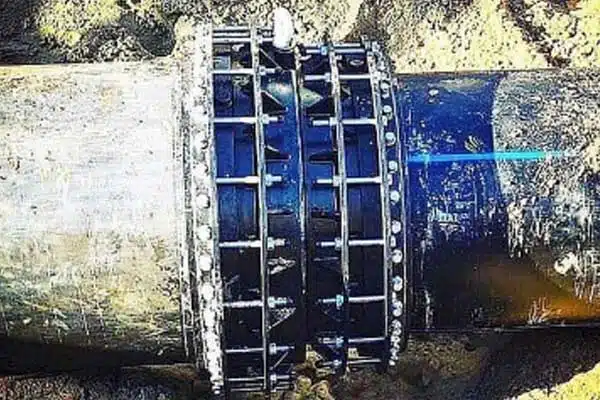
In an ideal world, every pipe in a system would be the same material. In reality, especially during upgrades and repairs, you’ll be asked to connect modern plastics to old metals. For example, a lightweight PVC pipe needs to be connected to a heavy, thick-walled ductile iron pipe. You cannot weld them. You cannot glue them. You need a mechanical solution that can bridge the gap between these two completely different worlds. This is where our expertise in manufacturing comes in. We understand that a one-size-fits-all approach doesn't work.
The Right Connection for the Right Pair
The key is using a coupling designed for this exact purpose. A "wide-range" or "universal" coupling is your best friend here. It has a wider tolerance for outside diameters and a specially profiled gasket that can create a strong seal on both smooth plastic and rougher metallic surfaces.
Here's a quick guide for common pairings:
| Pipe 1 Material | Pipe 2 Material | Recommended Connection | Key Consideration |
|---|---|---|---|
| Ductile Iron (DI) | PVC | Wide-Range Flexible Coupling | The ODs will be very different for the same nominal size. Measure both before ordering. |
| Steel | GRP | Wide-Range Flexible Coupling | Ensure the gasket material (e.g., EPDM, NBR) is compatible with the sewer contents. |
| Asbestos Cement (AC) | PVC / DI | Wide-Range Flexible Coupling | The AC pipe is very brittle. Do not overtighten. The coupling provides a gentle, compressive seal. |
| HDPE | Any Material | Restrained End Coupling + Internal Stiffener | HDPE pipe is soft and can deform under pressure. An internal stainless steel stiffener must be inserted into the HDPE pipe end to provide rigidity before installing the coupling.Do used restrained end type coupling for HDPE pipe even properly anchored instrument is available |
At our factory, we can provide not just the coupling but also advice on the best practices for each material combination. We can also supply couplings with different rubber materials, like NBR for systems with oily or industrial waste, or EPDM for standard water and sewage. It's about providing a complete solution, not just a product.
How can you fix pipe misalignment in sewer system connections?
Pipes that don't line up perfectly are a contractor's nightmare. Forcing a fit causes stress and future leaks. There is a simple tool that solves this problem instantly.
Use a flexible coupling to fix minor pipe misalignment. These couplings can handle both parallel misalignment and angular deflection up to a certain degree, creating a stress-free, watertight seal without forcing the pipes.
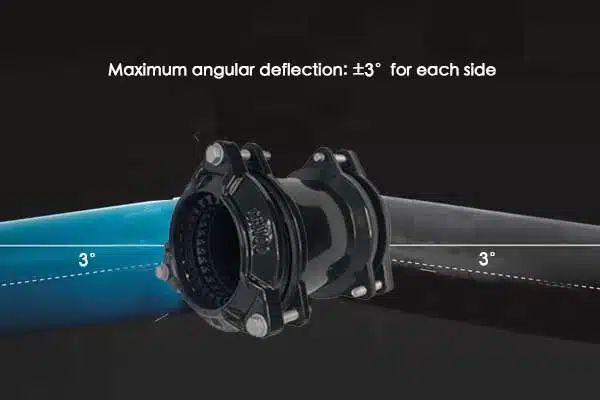
It’s one of the most common sights in an excavation trench: the two pipe ends you need to join are not pointing directly at each other. One might be a little higher, or off to the side, or coming in at a slight angle. This is pipe misalignment. Your first instinct might be to use brute force to pull the pipes into line, but this is a terrible idea. It puts immense stress on the pipes, which will eventually lead to a crack or a failed joint. Forcing a connection is just building a future problem. A much better way is to use a fitting that is designed to accommodate the misalignment.
Two Types of Misalignment Solved
A flexible coupling can handle both common types of misalignment, within limits:
- Angular Deflection: This is when the pipes meet at an angle instead of in a straight line. Most standard flexible couplings can handle up to 4 degrees of angular deflection. This is more than enough for most situations. The rubber gasket flexes to seal the joint even though the pipes are not straight.
- Parallel Misalignment: This is when the pipes are parallel to each other but their centerlines are offset. While couplings aren't specifically designed for large parallel offsets, their ability to handle angular deflection means you can use a short "pup" piece of pipe between two couplings to easily correct for any offset.
I once visited a site where the team had spent half a day trying to pull two large-diameter pipes into alignment. They were using chains and an excavator. I suggested they stop and just use one of our flexible couplings. They were skeptical but tried it. The installation took 15 minutes. The coupling easily absorbed the slight angle, and the connection was perfect and stress-free. It saved them hours of labor and, more importantly, prevented a future pipe failure.
How do you handle different pipe diameters and OD tolerance issues?
Connecting a DN100 pipe to a DN150 is a common problem. Standard parts don't fit, causing project delays. We have a custom solution for any size difference.
For different nominal pipe diameters, use a step coupling . For slight OD variations within the same nominal size, use a wide-range flexible coupling. Both ensure a perfect seal on pipes with different outside diameters.
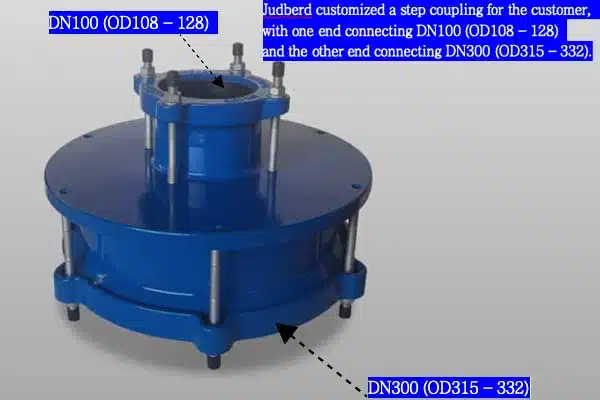
One of the biggest sources of confusion is pipe diameter. The "nominal diameter" (like DN100 or 4 inches) is just a name. The actual "outside diameter" (OD) can vary a lot between different materials and even different manufacturing standards for the same material. When you need to connect two pipes, the OD is the only measurement that matters.
When you have two different nominal sizes, say you're tapping a small service line into a large main, you need a special kind of fitting.
Step Couplings: The Solution for Different Sizes
A step coupling, also known as a reducer coupling, is the answer. It looks like a regular flexible coupling, but it's designed with two different-sized ends to match the ODs of the two different pipes. This allows you to make a direct, secure connection between, for example, a DN150 pipe and a DN200 pipe.
But sometimes the difference is too big for an off-the-shelf product. This is where our custom design capability becomes critical. Last year, a client in South America had a very specific problem. They needed to connect a DN300 main line to a DN100 branch line. The diameter difference was huge. No standard step coupling could handle it. They were facing a complex, multi-part fabricated solution that was expensive and had multiple potential leak points. They came to us for help. Our engineers designed a custom, one-piece step coupling. We manufactured a special casing and molded a unique rubber gasket that perfectly transitioned from the large OD to the small OD. We shipped it to them, and it solved their problem perfectly. This is the kind of problem-solving that sets a true manufacturing partner apart.
Is a repair clamp or a coupling better for sewer pipe repair?
A leaking sewer pipe needs a fast, reliable fix. But should you use a clamp or a coupling? The wrong choice could mean digging it all up again soon.
Use a repair clamp for fixing localized damage like cracks or holes on an existing pipe. Use a coupling to join two separate pipe ends, for example, when replacing a whole section of damaged pipe.
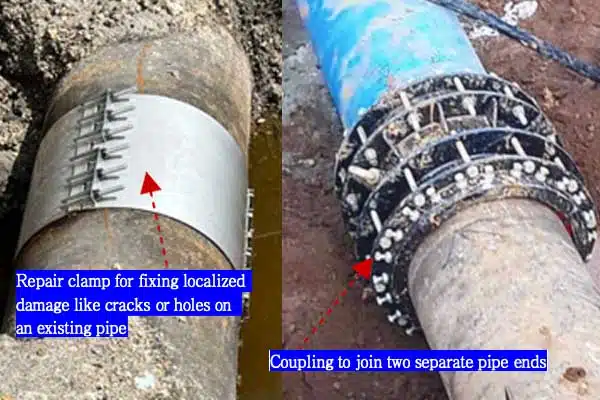
When you have a leak, you want to fix it fast. Both repair clamps and couplings can be used, but they are designed for very different jobs. Using the wrong one can lead to a failed repair. I have seen it happen many times. A contractor uses a clamp when they should have cut out the section, leading to a repeat failure a few months later.
The difference is simple: one covers a problem, the other replaces it.
When to Use a Repair Clamp
Think of a repair clamp as a heavy-duty bandage. It's a metal sleeve with a rubber gasket on the inside that you wrap around the outside of a damaged pipe.
- Use it for: Pinhole leaks, small cracks, corrosion spots, or other localized damage where the pipe is still structurally sound.
- The process: You clean the area around the leak, open the clamp, wrap it around the pipe over the damaged spot, and tighten the bolts. The gasket compresses against the pipe and seals the leak.
- The advantage: It's extremely fast. You don't have to shut down the line or cut the pipe.
When to Use a Coupling
A coupling is used to build a bridge. It connects two separate pipe ends.
- Use it for: Situations where a section of pipe is so badly damaged that it needs to be cut out and replaced. You cut out the bad piece, put in a new piece of pipe, and use two couplings to connect the new piece to the old pipe on either side.
- The process: Cut the pipe, remove the damaged section, insert the new pipe, and install a coupling at each end.
- The advantage: It restores the structural integrity of the line. It's not just a patch; it's a permanent replacement of the damaged part.
So, the decision is simple: If the pipe has a small wound, use a repair clamp. If the pipe needs surgery, you need to cut it out and use couplings.
Why should you stop welding and use faster, safer ways to connect sewer pipes?
Welding pipes in a trench is slow, dangerous, and requires specialized labor. There's a modern method that is faster, safer, and just as strong for many applications.
Use mechanical couplings instead of welding. They install in minutes with basic tools, require no hot work permits, and eliminate fire hazards. This makes them significantly faster and safer, especially for sewer line connections.
For decades, welding was the go-to method for joining steel or ductile iron pipes. It creates a strong, permanent bond. But it's also a process from another era. It's slow, it's dangerous, and it's expensive. In the world of modern construction and repair, especially for sewer lines, there is a much better way. Mechanical flexible couplings have made welding obsolete for most pipe-to-pipe connections.
As professional manfuacturer, we are focused on efficiency and safety, and the advantages of couplings are impossible to ignore. Project managers who switch from welding to couplings never go back.
Welding vs. Mechanical Couplings: No Contest
| Factor | Welding | Mechanical Coupling |
|---|---|---|
| Safety | High Risk. Involves open flames, fumes, and fire hazards. Requires a fire watch and permits. | Low Risk. No hot work. No fire hazard. Can be done safely in confined spaces. |
| Speed | Slow. Requires extensive pipe end preparation, welding time, and cooling time. | Fast. Installs in minutes. Just slide it on and tighten the bolts. |
| Conditions | Limited. Cannot be done in wet or rainy conditions. | Versatile. Can be installed in almost any weather. |
| Labor | Specialized. Requires a certified welder, who is expensive and often in short supply. | General. Can be installed by any trained laborer with a basic torque wrench. |
| Cost | High. High labor costs, equipment rental, and project delays add up. | Low. The overall installed cost is significantly lower due to speed and labor savings. |
Think about a repair deep in a trench. With welding, you have to make sure the trench is perfectly dry, get a hot work permit, have a welder and a fire watch person on site, and wait for the joint to cool. With a mechanical coupling, one worker can go into the trench with a single tool and have the connection finished in less time than it takes to set up the welding equipment. It's a huge leap forward in productivity and safety.
What are the biggest risks when connecting old sewer pipes, and how do you avoid them?
A failed connection on a sewer line is a costly and messy disaster. Hidden risks can undermine your project. Learn to identify and avoid them before they happen.
The biggest risk is a joint failure leading to leaks. This is caused by using the wrong connection type, ignoring pipe imperfections, or poor installation. Avoid this by using the correct flexible coupling and following proper installation procedures.
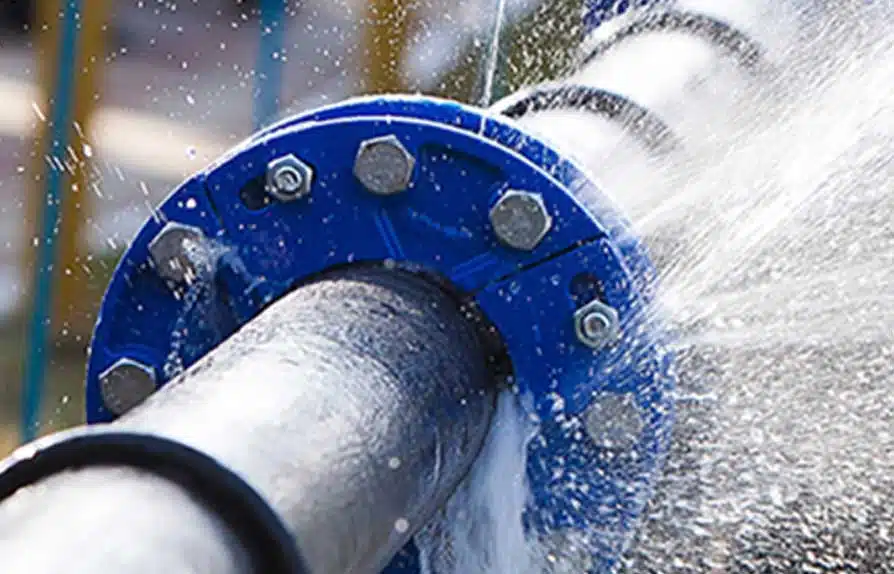
After 30 years of manufacturing pipe fittings, I can tell you that a product failure is rarely the fault of the product itself. It's almost always due to a risk that wasn't properly managed during selection or installation. When you're connecting a new sewer pipe to an old one, the stakes are high. A failure isn't just a drip; it's a potential environmental contamination and an expensive excavation project to fix what should have been done right the first time. The good news is that these risks are entirely avoidable with a little knowledge and care.
Top 3 Risks and How to Avoid Them
-
Risk: Using the Wrong Product.
- What it looks like: Using a standard coupling when you need a step coupling, or using a rigid flange on a brittle old pipe.
- How to avoid it: Always measure the Outside Diameter (OD) of both pipes before you order anything. Don't rely on the nominal pipe size. Talk to your supplier. Tell them the pipe materials, diameters, and the site conditions. A good supplier, like us, will act as your partner to ensure you get the exact fitting you need.
-
Risk: Ignoring Pipe Condition.
- What it looks like: Trying to install a coupling over a heavily corroded, pitted, or cracked section of pipe.
- How to avoid it: Inspect the pipe ends thoroughly. Clean them with a wire brush to get a smooth, sound surface for the gasket to seal against. If the pipe end is too damaged, cut it back a little further to a healthier section of pipe.
-
Risk: Improper Installation.
- What it looks like: Under-tightening or over-tightening the bolts. This is the #1 cause of leaks.
- How to avoid it: Use a torque wrench. Every coupling we manufacture has a specific torque value printed on it. Tightening the bolts to this specification ensures the gasket is compressed just the right amount to create a perfect seal without damaging the pipe or the coupling. It’s a simple step that guarantees a professional result.
By being aware of these risks and taking these simple steps to avoid them, you can turn a potentially difficult job into a straightforward, successful connection.
Conclusion
Connecting old and new sewer pipes is simple with the right tools. Flexible couplings solve most challenges like different sizes and materials, ensuring a fast, safe, and durable connection every time.
