
Uncontrolled pipe movement can cause catastrophic failures. You worry about leaks and damage. But what is the real solution to this constant stress and potential downtime?
Pipeline expansion and movement are caused by thermal changes, pressure fluctuations, and external forces like ground settlement. The best solution involves using expansion joints, loops , or offsets to absorb this movement. This protects the system from stress and potential failure.
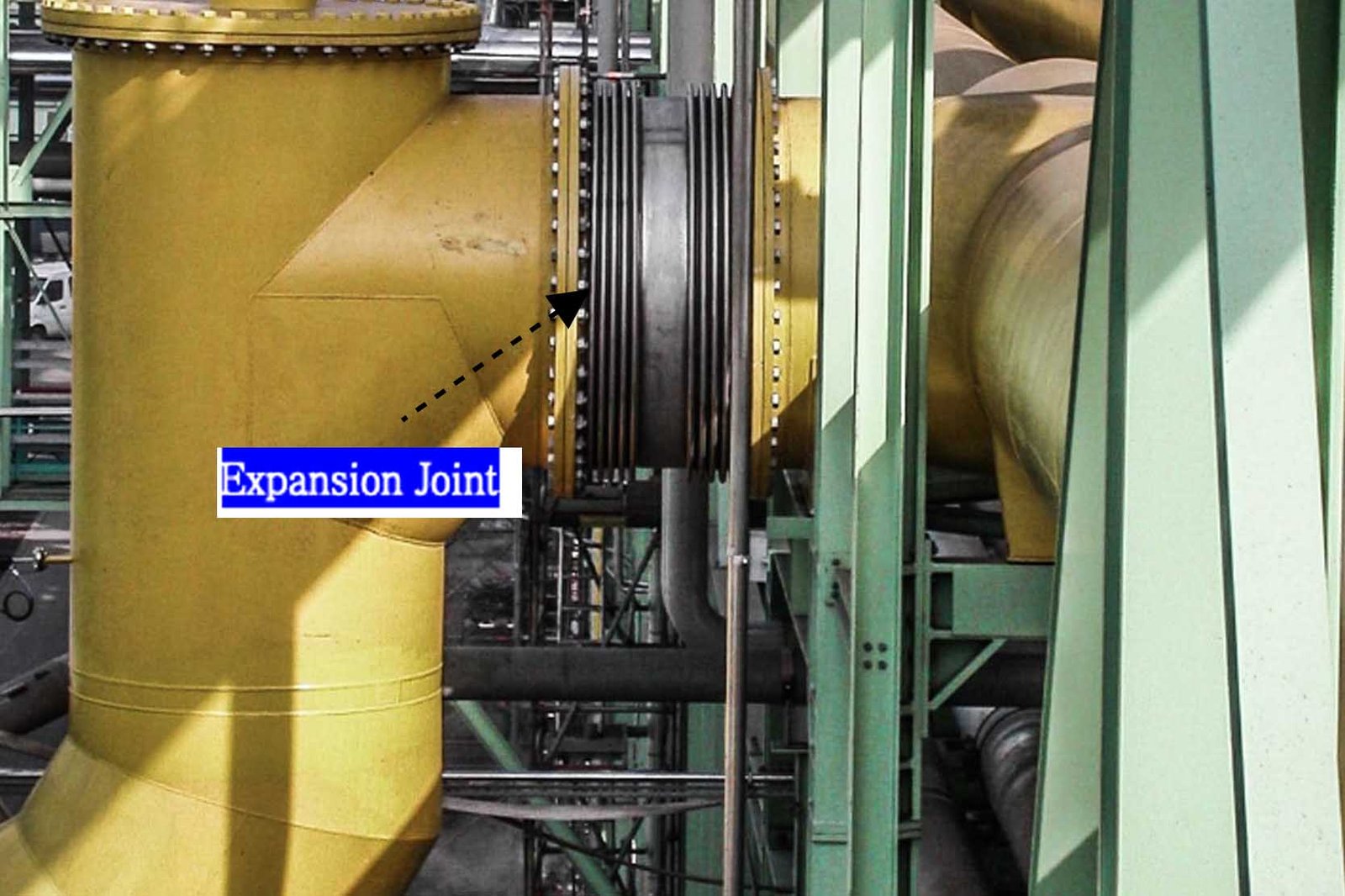
I've seen it happen more times than I can count in my 30 years in this business. A multi-million dollar project is put at risk because someone ignored the simple physics of how pipes move. It's a costly mistake, but one that is easy to avoid. Understanding the forces at play is the first step to building a safe and reliable pipeline system. Let's break down everything you need to know, step by step.
What Causes Pipeline Expansion and Movement?
Pipes don't just sit there; they move. This movement can seem mysterious and is often damaging. What are the unseen forces pushing and pulling on your pipelines every day?
The primary causes are thermal changes, which make pipes expand or contract. Other factors include internal pressure surges, the weight of the fluid, and external forces like seismic activity or ground settlement. These combined forces create stress on the entire system.
In my experience, about 90% of the movement issues we see come from a few key sources. It's crucial to understand them because the solution you choose depends directly on the cause. Let's look at them more closely.
The Main Culprits of Pipe Movement
- Thermal Changes: This is the big one. Every material expands when it gets hot and contracts when it gets cold. A long run of pipe can grow or shrink by several inches with just a moderate temperature swing. I once consulted on a project in the desert where the pipeline grew by nearly a foot from the cool night to the hot day. Without a way to absorb that, something has to give.
- Internal Pressure: When you pressurize a pipeline, especially one with bends, it tries to straighten out. This is known as the Bourdon Effect. Sudden pressure spikes, or water hammer, can create powerful dynamic forces that cause the pipe to jerk and vibrate, putting immense stress on joints and anchors.
- External Forces: Your pipeline doesn't exist in a vacuum. The ground can settle, buildings can shift, and nearby heavy machinery can cause vibrations. For example, in earthquake-prone regions, pipelines must be designed to handle significant ground movement without failing.
| Cause | Type of Force | Common Result |
|---|---|---|
| Temperature Change | Slow, powerful push/pull | Buckling or tension failure |
| Internal Pressure | Dynamic, outward force | Straightening at bends, vibration |
| Ground Settlement | Slow, shearing force | Misalignment, broken connections |
| Seismic Activity | Rapid, multi-directional shaking | Catastrophic failure, leaks |
What Types of Pipe Movement Must Be Considered?
Your pipeline is moving in more ways than you think. Ignoring one type of movement can lead to disaster. Are you accounting for all the ways your pipes can shift?
You must consider axial (compression/extension), lateral (sideways), and angular (bending) movements. Torsional (twisting) movement can also occur. A complete solution addresses all potential movements to ensure the system's integrity and long life.
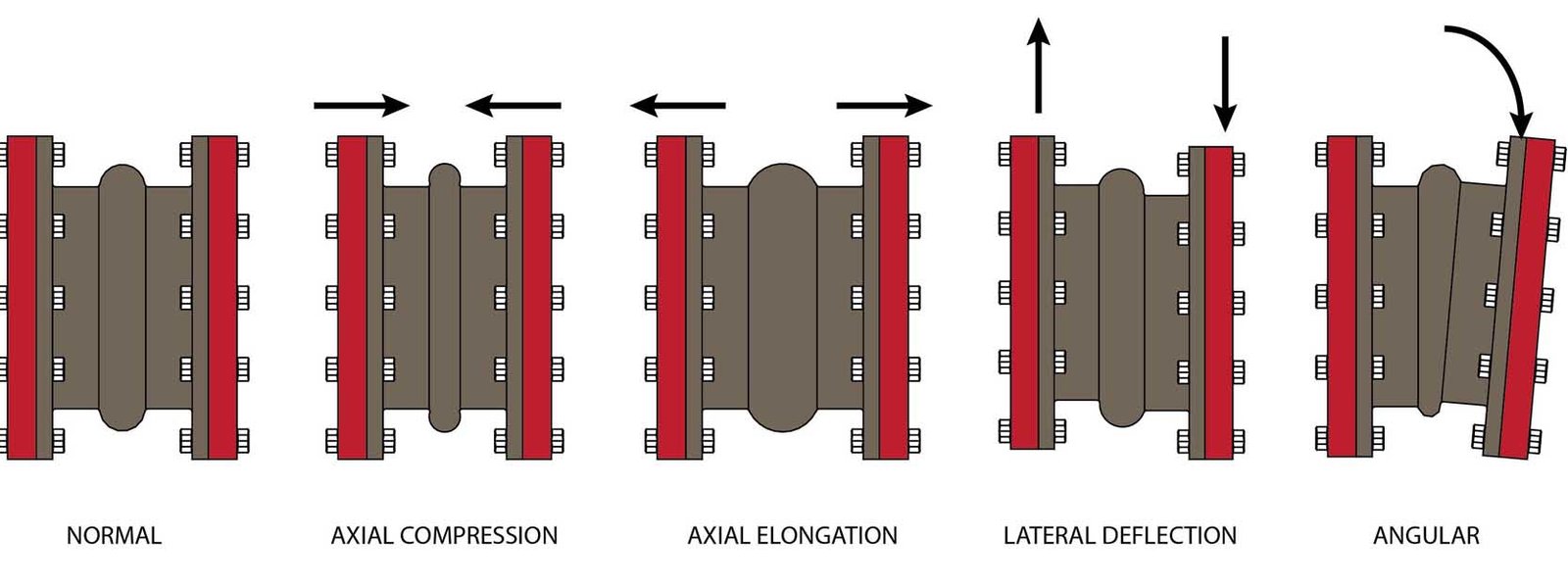
When we design a solution for a client, we don't just think "movement." We break it down into specific directions. Imagine you're holding a spring. You can push it together or pull it apart—that's axial movement. You can bend it from side to side—that's lateral movement. Or you can bend it like a hinge—that's angular movement. Your pipes are doing all of these things at once.
Breaking Down the Movements
A single expansion joint might be great at handling axial compression, but it might fail if it's also subjected to a large lateral shift it wasn't designed for. That's why identifying the specific types of movement is so critical.
- Axial Movement : This is movement along the centerline of the pipe. It's the straightforward expansion (extension) and contraction (compression) due to temperature changes.
- Lateral Movement: This is a sideways shift of the pipe, perpendicular to its centerline. It's often caused by L-shaped or Z-shaped piping configurations where one leg expands.
- Angular Movement: This occurs when one end of the pipe bends or rotates with respect to the other, like a hinge. This often happens at flange connections to equipment that is settling or misaligning.
- Torsional Movement: This is a twisting or rotational movement around the pipe's centerline. It's less common but can be very destructive.
Understanding which of these are present, and in what combination, is the key to selecting the right control method.
What Happens If Pipeline Movement Is Not Controlled?
Ignoring pipe movement seems easy until the bill for repairs comes due. The consequences can be catastrophic. What is the real cost of doing nothing about pipeline expansion?
Uncontrolled movement leads to high stress on pipes, joints, and anchors. This can cause pipe buckling, weld failures, flange leaks, and damage to connected equipment like pumps and valves. Ultimately, it results in costly repairs, downtime, and safety hazards.
I got a call once from a plant manager in a panic. A main water line had buckled, ripped an anchor right out of the concrete floor, and flooded a critical part of their facility. They were facing days of downtime and hundreds of thousands of dollars in damages. The cause? A 200-foot straight run of pipe with no expansion joint installed. The summer heat did the rest. This is not a rare story.
The Domino Effect of Failure
When you don't give a pipe a place to move safely, it will find a place to move dangerously. The force generated by thermal expansion is immense and unforgiving.
- Pipe and Support Failure: The pipe itself can bend or buckle. I've seen steel pipes bowed like a banana. The pipe supports and anchors, which are meant to hold the pipe in place, can be crushed or ripped from their mountings.
- Equipment Damage: The force doesn't just stay in the pipe. It travels down the line and pushes against anything connected to it. This is especially damaging to sensitive equipment like pumps, turbines, and valves. The nozzle loads can crack casings and destroy bearings.
- Joint and Seal Failure: The weakest points in a system are often the connections. Uncontrolled movement will cause flanges to leak and welds to crack. For drinking water systems, this is a major problem, as a leak not only loses water but can also allow contaminants to enter the line when pressure is low.
How to Calculate Thermal Expansion in Pipelines?
You can't manage what you don't measure. Guessing how much your pipe will move is a recipe for disaster. Is there a simple way to calculate it accurately?
To calculate thermal expansion, use the formula: ΔL = α L ΔT. Here, ΔL is the change in length, α is the coefficient of thermal expansion for the pipe material, L is the original length, and ΔT is the temperature change.
This calculation is the absolute foundation of proper pipeline design. It's not complicated, but you need to get the inputs right. Let's walk through it. I tell my engineers that this simple formula is one of the most important tools we have.
A Step-by-Step Guide to the Calculation
The formula is ΔL = α L ΔT.
- ΔL: The Change in Length. This is what you're solving for. It's the amount of movement you need to accommodate.
- α (alpha): The Coefficient of Thermal Expansion. This is a property of the material itself. It tells you how much that material expands for each degree of temperature change. You can find this in engineering handbooks or from the pipe manufacturer.
| Material | Coefficient (α) per °C |
|---|---|
| Carbon Steel | 12.0 x 10⁻⁶ |
| Stainless Steel | 17.3 x 10⁻⁶ |
| Ductile Iron | 12.0 x 10⁻⁶ |
| Copper | 16.5 x 10⁻⁶ |
| PVC | 54.0 x 10⁻⁶ |
- L: The Length of the Pipe. This is the length of the straight run of pipe between two anchors.
- ΔT (delta T): The Change in Temperature. This is the most-often miscalculated value. It's the difference between the hottest or coldest the pipe will ever get during operation and the temperature at which it was installed.
Example: Let's say you have a 50-meter ductile iron water main (L = 50m). You install it at 15°C. In the summer, the water running through it could reach 35°C.
- ΔT = 35°C - 15°C = 20°C
- α for Ductile Iron = 12.0 x 10⁻⁶ /°C
- ΔL = (12.0 x 10⁻⁶) (50 m) (20°C) = 0.012 meters, or 12 mm.
That doesn't sound like much, but 12mm of movement with nowhere to go can generate thousands of pounds of force.
How to Control Pipeline Expansion and Movement?
Knowing your pipes will move is one thing; controlling it is another. There are many options, but which is right for you? What are the best methods available?
The primary methods are using pipe loops, offsets, or mechanical expansion joints. Pipe loops and offsets use the pipe's own flexibility, while expansion joints are engineered components designed to absorb movement in a compact space.
Choosing the right method is a balance of space, cost, and performance. For over 30 years, our factory has specialized in manufacturing one of the most effective solutions: engineered expansion joints. But they aren't the only option, and it's important to know the pros and cons of each.
Comparing the Top 3 Solutions
| Method | How it Works | Pros | Cons |
|---|---|---|---|
| Pipe Loops | A large U-shape is built into the pipeline. The flexing of the "U" absorbs movement. | Simple concept, uses same material as pipe. | Requires a huge amount of space, high material cost, pressure drop. |
| Offsets/Dog-legs | Uses the natural flexibility of existing 90-degree bends in the piping. | Can be "free" if the layout allows. | Limited movement absorption, complex stress calculations. |
| Expansion Joints | A flexible, engineered component installed in the line to compress, extend, or bend. | Very compact, absorbs movement in multiple directions, isolates vibration. | Higher initial component cost, requires proper anchoring. |
For many modern projects where space is tight and reliability is paramount, expansion joints are the clear winner. This is where we focus our R&D. For example, at our factory, our Judberd rubber expansion joints have an integrally vulcanized rubber flange. This single-piece design creates a much stronger, more reliable seal under pressure compared to older designs that use separate gaskets.
Rubber vs Metal Expansion Joints: Which One Should You Choose?
You've decided on an expansion joint, but now face another choice: rubber or metal? The wrong decision can be costly. How do you pick the right material for your needs?
Choose rubber for excellent multi-directional movement absorption, vibration damping, and corrosion resistance, especially with water. Choose metal for very high temperatures, high pressures, and applications where chemical compatibility with rubber is a concern.
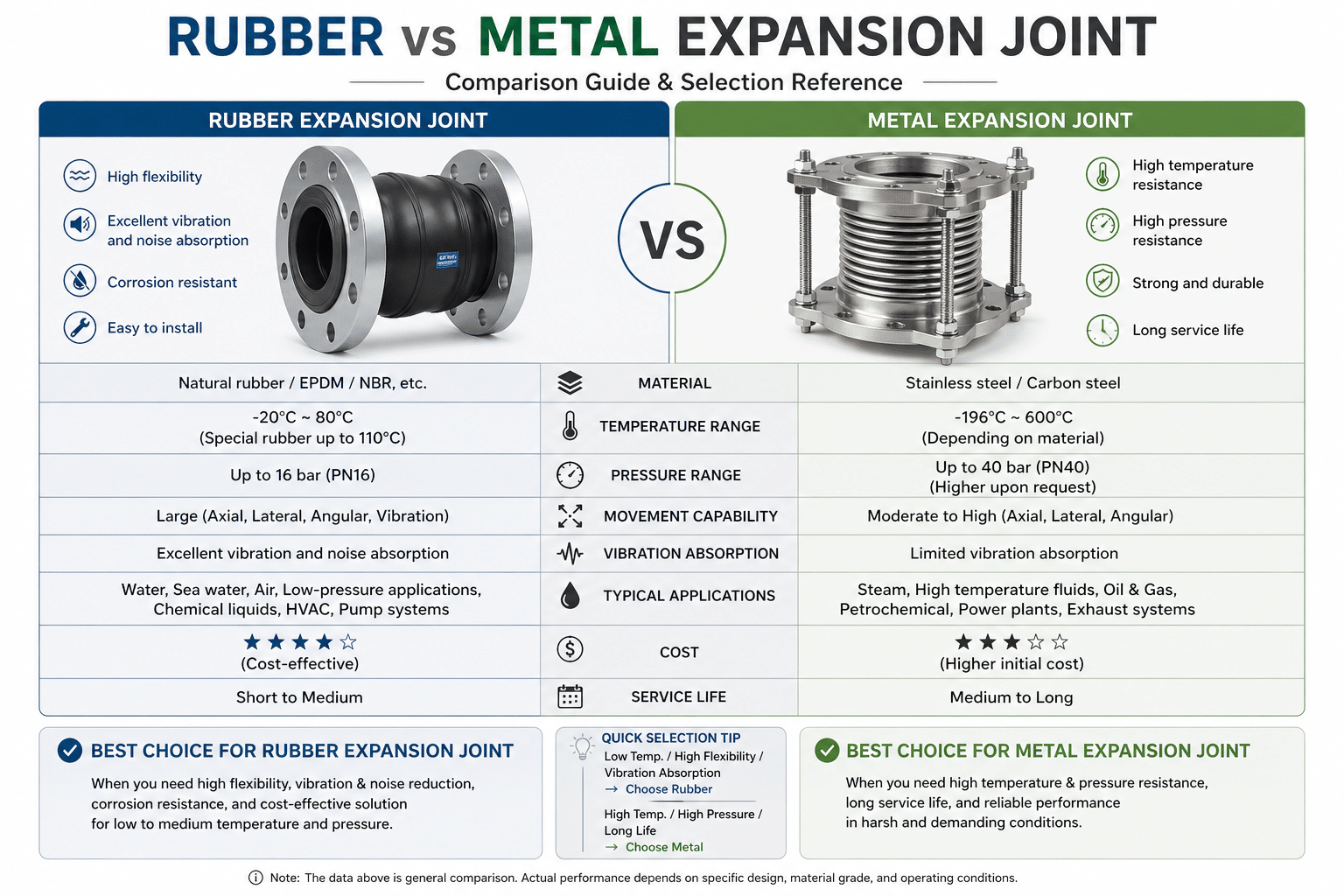
This is a question we get from customers every day. As a manufacturer of pipe fittings, including joints, we have deep experience with both. The truth is, one is not universally "better" than the other; they are suited for different jobs. For our typical customers in the drinking water and general industrial sectors, the choice is often clear.
A Head-to-Head Comparison
| Feature | Rubber Expansion Joints | Metal Expansion Joints |
|---|---|---|
| Movement | Excellent. Absorbs axial, lateral, and angular movement simultaneously. | Good for axial movement. Limited lateral/angular capability. |
| Vibration/Noise | Excellent. Isolates vibration and dampens noise from pumps and equipment. | Poor. Can actually transmit noise and vibration down the pipeline. |
| Temperature | Good. Typically up to ~120°C (250°F), depending on the elastomer. | Excellent. Can handle very high temperatures (>800°C). |
| Pressure | Good. Standard up to ~16 bar (230 psi), higher pressures available. | Excellent. Can be designed for extremely high pressures. |
| Corrosion | Excellent. Rubber does not rust and is resistant to many chemicals. | Susceptible to corrosion and fatigue cracking over time. |
| Cost | Generally more cost-effective. | Higher initial cost. |
For most drinking water pipeline applications, where temperatures are moderate and protecting pumps from vibration is a huge benefit, a high-quality rubber expansion joint is the superior and more economical choice. They are more forgiving and absorb stress from multiple directions, which is what real-world systems need.
Where Should Expansion Joints Be Installed in a Pipeline System?
Buying the right expansion joint is only half the battle. If you install it in the wrong place, it's useless or even dangerous. Do you know the strategic spots for installation?
Install expansion joints between fixed anchor points to absorb the expansion of that pipe section. Place them near equipment like pumps or turbines to isolate them from pipe stress and vibration. They are also used at building settlement joints.
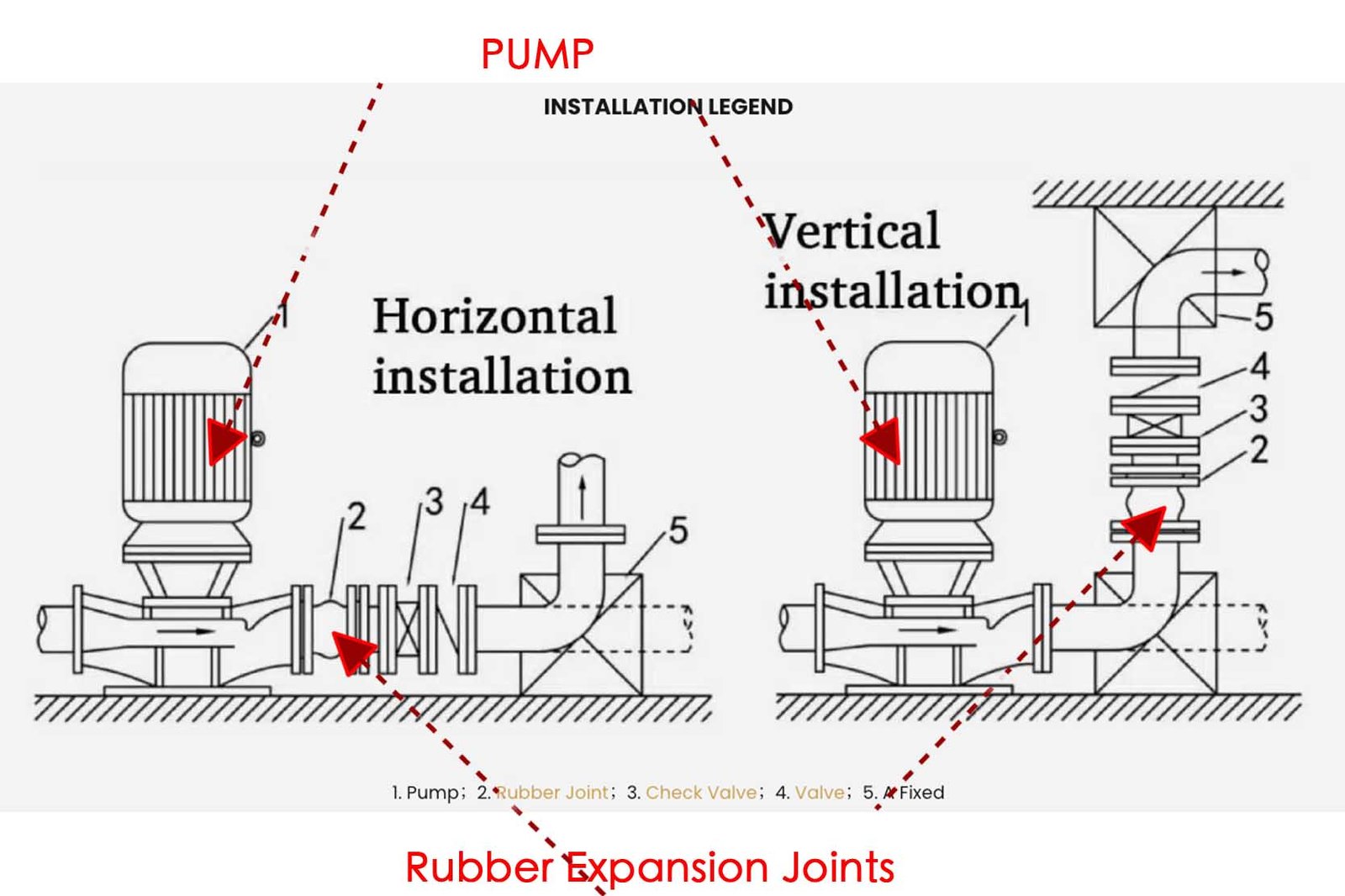
Placement is everything. An expansion joint works by absorbing the movement of a specific section of pipe. To do this effectively, you have to tell the pipe where to move. This is done with anchors and guides.
Key Installation Locations
- Between Main Anchors: A pipeline should be divided into sections with "main anchors"—strong points that are fixed and can withstand the full force of the pipeline. An expansion joint is then installed somewhere in the section between two anchors. The pipe must be guided so that it moves linearly into the joint.
- Protecting Pumps and Equipment: This is one of the most valuable uses of an expansion joint. Installing a joint on both the suction and discharge sides of a pump does two things. First, it prevents the pipe's expansion and contraction from putting force on the pump casing. Second, it absorbs the vibration from the pump, preventing it from shaking the entire pipe system. This extends the life of the pump bearings and seals significantly.
- At Building or Structure Crossings: When a pipe passes from the ground into a building or crosses a building's own expansion joint, a flexible pipe joint is needed to absorb the differential movement.
- Long Straight Runs: A very long straight pipeline will expand too much for a single joint. In this case, you create intermediate anchor points to divide the long run into shorter, manageable sections, each with its own expansion joint.
Common Installation Mistakes and How to Avoid Them?
A perfect product can be ruined by a bad installation. These common mistakes can cause your expansion joints to fail prematurely. Are your teams making any of them?
Common mistakes include not providing proper anchoring, misaligning the joint during installation, over-extending or over-compressing it to fit, and not using control rods when needed. Always follow the manufacturer's installation manual to avoid these issues.
Over my 30 years, I've personally seen installations where brand new, high-quality joints have failed within weeks. It's almost always due to one of a few common, avoidable errors. A well-installed joint from a quality manufacturer should last for many years.
The Top 4 Mistakes and How to Fix Them
- No (or Weak) Anchors: An expansion joint creates a pressure thrust force that tries to push the pipes apart. Anchors are not optional; they are required. The anchor must be strong enough to resist this force. Without a solid anchor, the pipe will just pull itself apart.
- Using the Joint to Fix Misalignment: An expansion joint is designed to absorb movement after installation. It is not a tool to connect two pipes that don't line up. Forcing the joint to make up for poor pipe fitting puts it under constant stress and will cause it to fail early. The pipes must be properly aligned first.
- Not Using Control Rods: In systems where you can't place a main anchor, or where you want to prevent the joint from over-extending due to a pressure surge, control rods are essential. They are metal rods that span across the joint and connect the two pipe flanges with nuts that limit how far the joint can stretch. At Judberd, we often supply our rubber expansion joints with control rod units to prevent dangerous pull-outs and ensure total system safety.
- Painting the Rubber: It seems harmless, but you should never paint the flexible rubber part of the joint. The solvent in the paint can attack the rubber, and the dried paint creates a hard shell that restricts movement and can cause the rubber to crack.
Conclusion
Controlling pipeline expansion is not optional; it is essential for the safety, reliability, and longevity of your entire system. Proper calculation, selection, and installation of expansion joints protects your investment.
