
Need to add a branch connection to a water main, but can't afford a shutdown? The downtime, costs, and customer complaints are a huge headache. We have a solution.
Hot tapping, or wet tapping, lets you install a new branch connection on a live, pressurized pipeline. This process uses specialized equipment to drill into the pipe without interrupting service, saving significant time and money for municipal and industrial water systems.
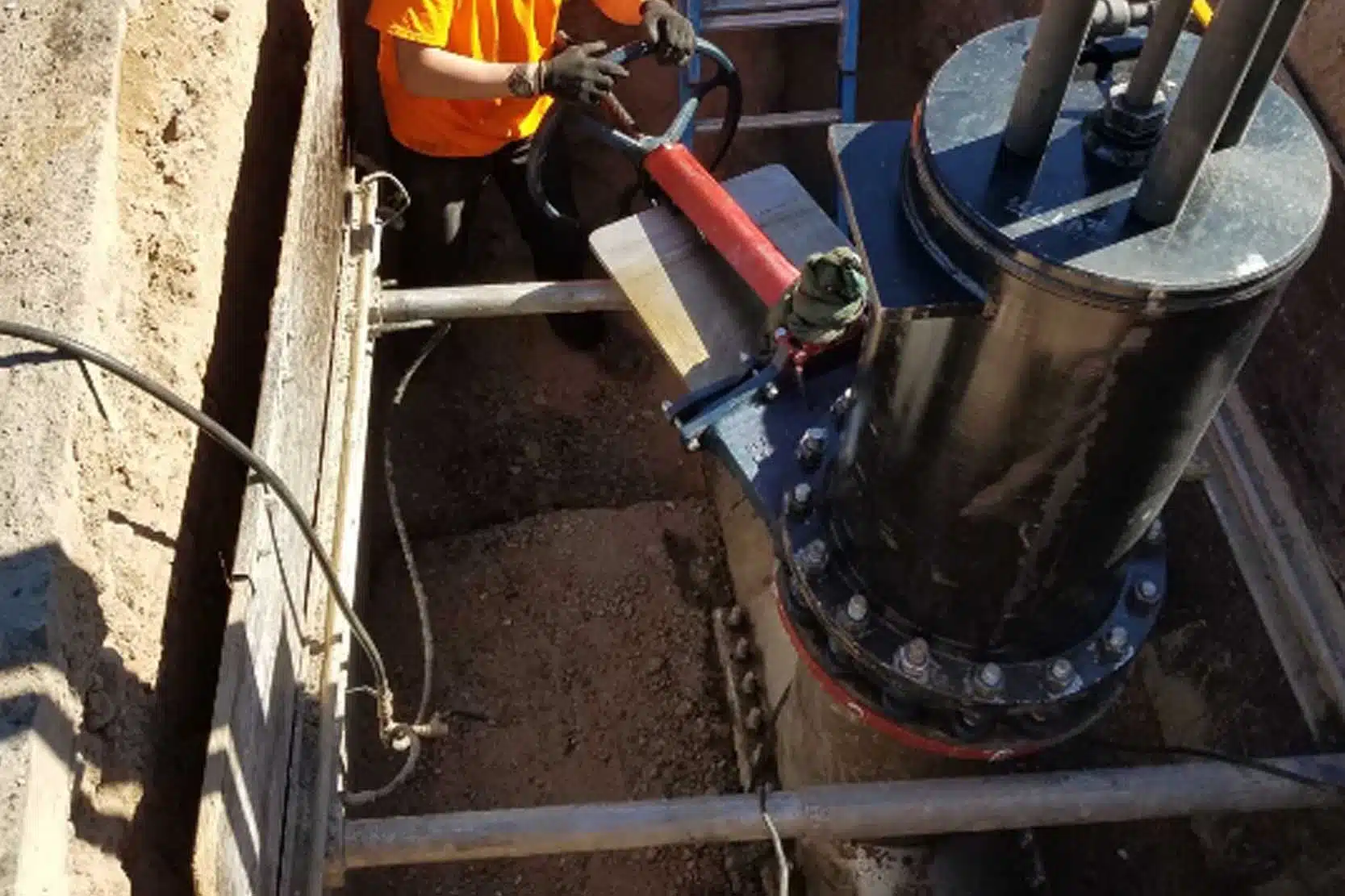
When I first entered the pipeline industry 30 years ago, the idea of drilling into a live, high-pressure water main sounded like madness. The standard procedure was always to shut everything down, drain the system, make the connection, and then go through the lengthy process of refilling and purging. It was safe but incredibly inefficient. Then I saw my first hot tap, and it changed my perspective completely. It was a clean, controlled, and impressively fast operation. It showed me that with the right tools, training, and engineering, we could perform complex modifications without disrupting service to thousands of people. This guide is built on those decades of experience, designed to walk you through how this critical process works and how to do it right.
What Is Hot Tapping and When Is It Used?
Managing a water system means constant upgrades and expansions. But how do you add a new line for a housing development without shutting down service for an entire neighborhood?
Hot tapping is the method of creating a new connection on an existing pipeline while it's still in operation. It's used for adding branches, installing sensors, or making repairs without service disruption, making it essential for municipal water systems.
Hot tapping, which we sometimes call wet tapping, is a fundamental technique in modern pipeline management. The core idea is to create a new branch from a "live" main without stopping the flow of water or depressurizing the system. This is crucial in municipal water supply, where continuous service is not just a convenience but a public health requirement. You use it when you need to extend the network, install a new fire hydrant , or add monitoring equipment like pressure sensors.
Tapping Sleeves vs. Tapping Saddles
The connection to the main pipe is made using one of two key components: a tapping sleeve or a tapping saddle .
- Tapping Saddles: These are simpler fittings that clamp onto the pipe to provide a reinforced outlet for the new connection. They work perfectly on stable, rigid pipes.
- Tapping Sleeves: A sleeve is a more robust, full-encirclement fitting. It not only provides a branch connection but also reinforces the pipe around the drilled hole. We always recommend a sleeve for large-diameter pipes or any pipe where there's a risk of leakage or structural weakness after drilling. The sleeve adds a layer of security that a simple saddle can't match.
Is It Safe to Tap Into a Live Pipeline Without Shutdown?
Drilling into a pressurized water main sounds incredibly risky. One wrong move could lead to a major leak, property damage, and serious safety concerns for the crew on site.
Yes, hot tapping is extremely safe when performed correctly by trained professionals using the right, high-quality equipment. The process involves multiple safety checks, complete pressure containment, and controlled drilling, making it a standard and reliable industry practice.
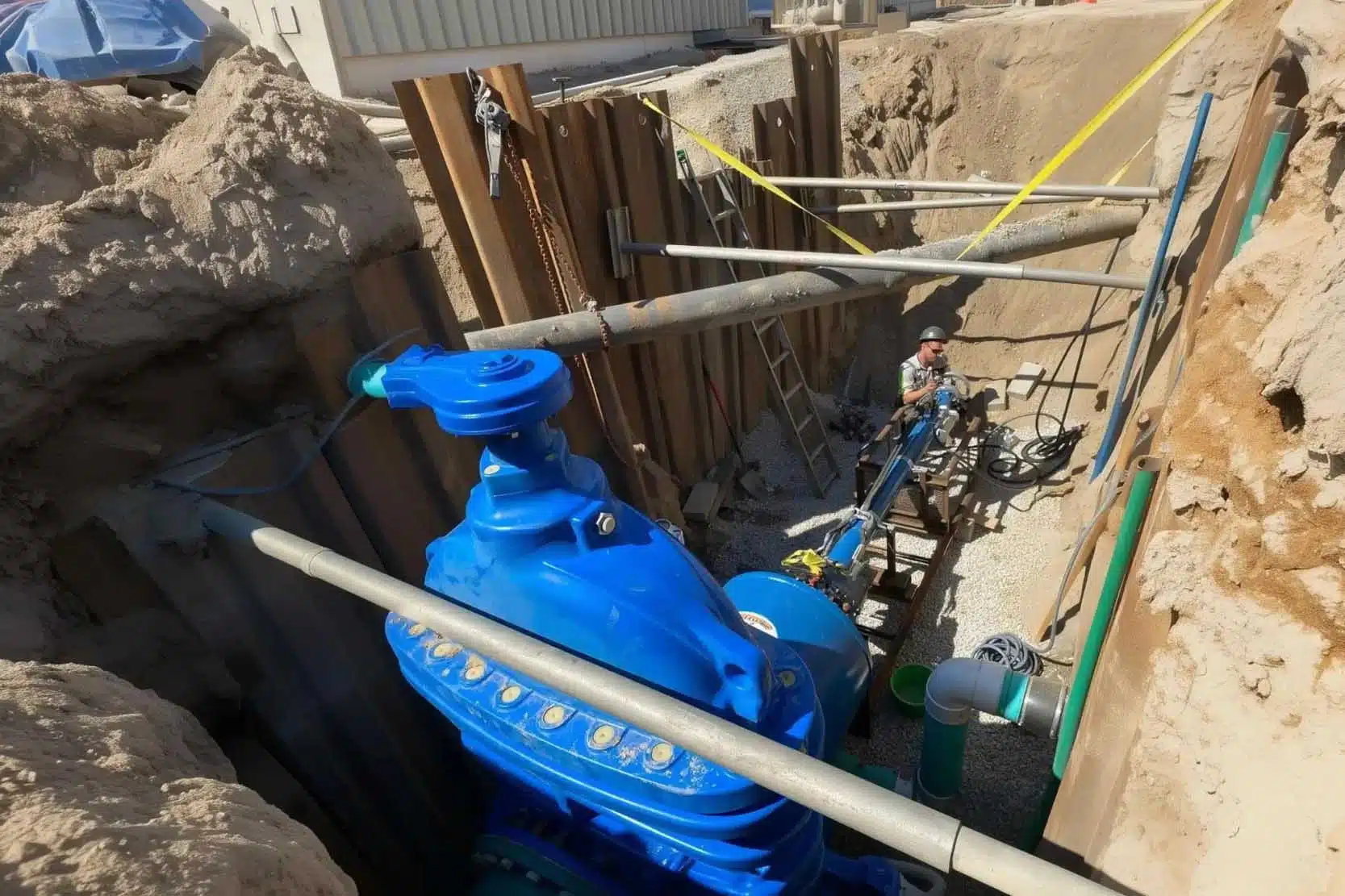
Safety is the number one priority in any pipeline operation, and hot tapping is no exception. The entire process is engineered to contain the pressure at every step. The tapping saddle or sleeve is bolted onto the pipe with a high-pressure gasket, creating a perfect seal. An isolation valve is then attached to the saddle. This entire assembly is pressure-tested before any drilling begins to ensure it's completely leak-proof. The tapping machine itself bolts directly to the valve, creating a sealed chamber. When the drill cuts through the pipe wall, all the pressure is contained within the machine and the fitting. There's no uncontrolled release of water.
However, this safety depends entirely on two things: the quality of the equipment and the skill of the operator. Using a poorly made saddle or a worn-out valve is asking for trouble. That’s why we put so much focus on quality control in our factory. Likewise, the procedure must be carried out by certified technicians who understand the hydraulics and the mechanics involved. They know how to check for pipe wall thickness, identify potential hazards, and operate the machinery smoothly.
What Equipment Is Required for Hot Tapping?
You're ready to perform a hot tap, but do you have the right gear? Using the wrong tools can cause leaks, damage the pipe, or even injure your team.
The core equipment includes a tapping machine (the drill), a tapping sleeve or saddle, and an isolation valve. The sleeve or saddle creates a sealed connection point, the valve controls the flow, and the machine performs the cut under pressure.
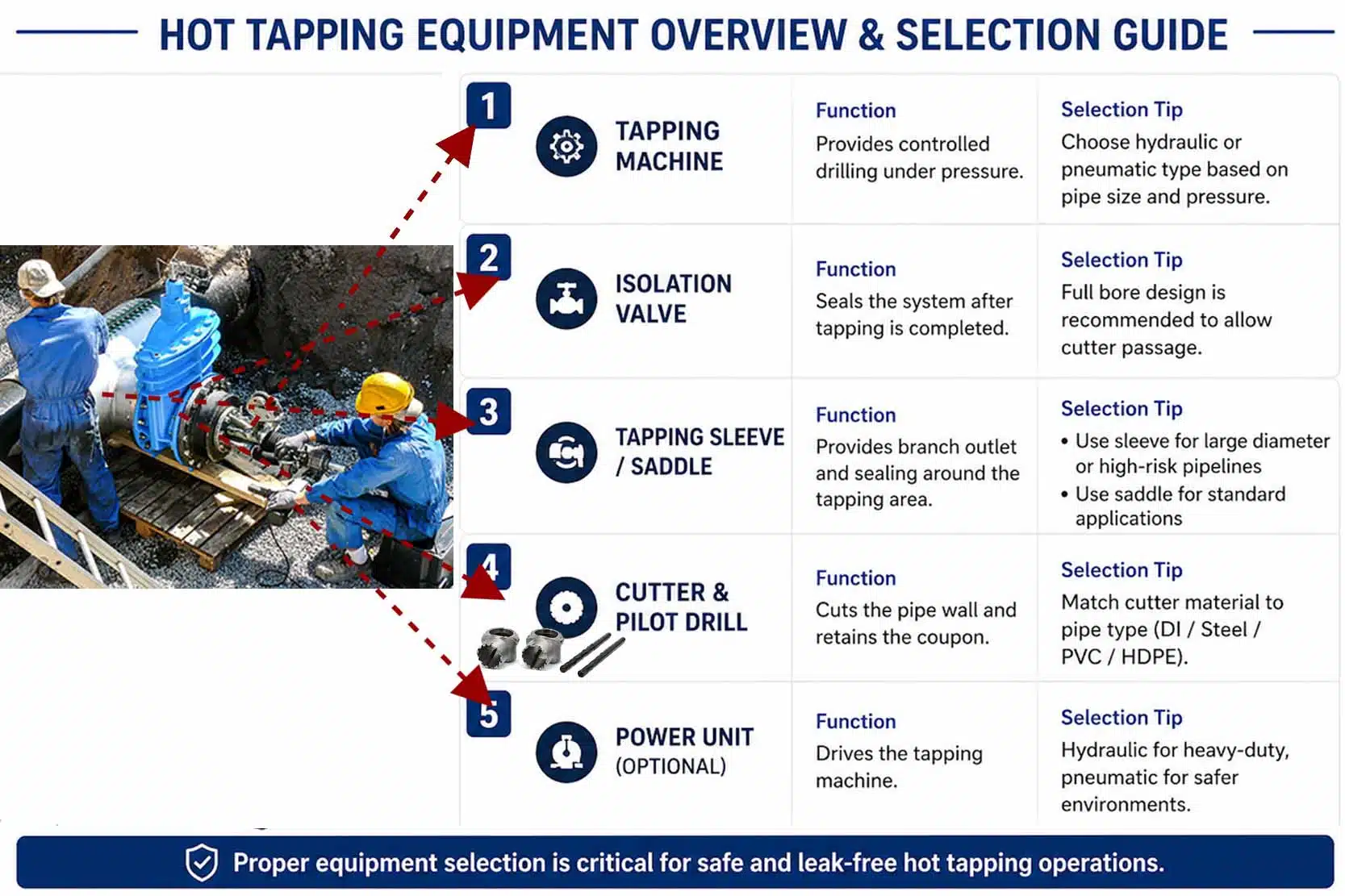
Having the right set of tools is non-negotiable for a successful hot tap. Each piece has a specific job in ensuring a safe and leak-free connection. Over the years, I've seen projects delayed or fail because a team showed up missing a critical component. Let's break down the essential equipment.
Core Hot Tapping Components
The entire setup works as an integrated system. Here’s a look at the key parts and what they do.
| Equipment | Function |
|---|---|
| Tapping Machine | The specialized drilling machine that mounts on the valve. It houses the cutter and has a boring bar that advances the cutter through the pipe wall. |
| Tapping Sleeve/Saddle | The fitting that clamps around the existing pipe. It has a flanged or threaded outlet and a gasket to create a permanent, sealed connection point. |
| Isolation Valve | Typically a gate valve or ball valve that is bolted to the saddle/sleeve. The tapping machine drills through it. After the tap, it is closed to isolate the new branch. |
| Cutter & Pilot Drill | The cutting tool attached to the tapping machine's boring bar. The pilot drill keeps the cutter centered and retains the cut piece of pipe (the "coupon"). |
| Gaskets and Bolts | High-quality, high-pressure gaskets and bolts are essential for creating a durable, leak-proof seal between the pipe, the saddle, and the valve. |
Step-by-Step Hot Tapping Procedure (Full Process Explained)?
The theory of hot tapping sounds good, but what are the actual steps involved? Missing a single detail in the procedure could compromise the entire operation and lead to a costly failure.
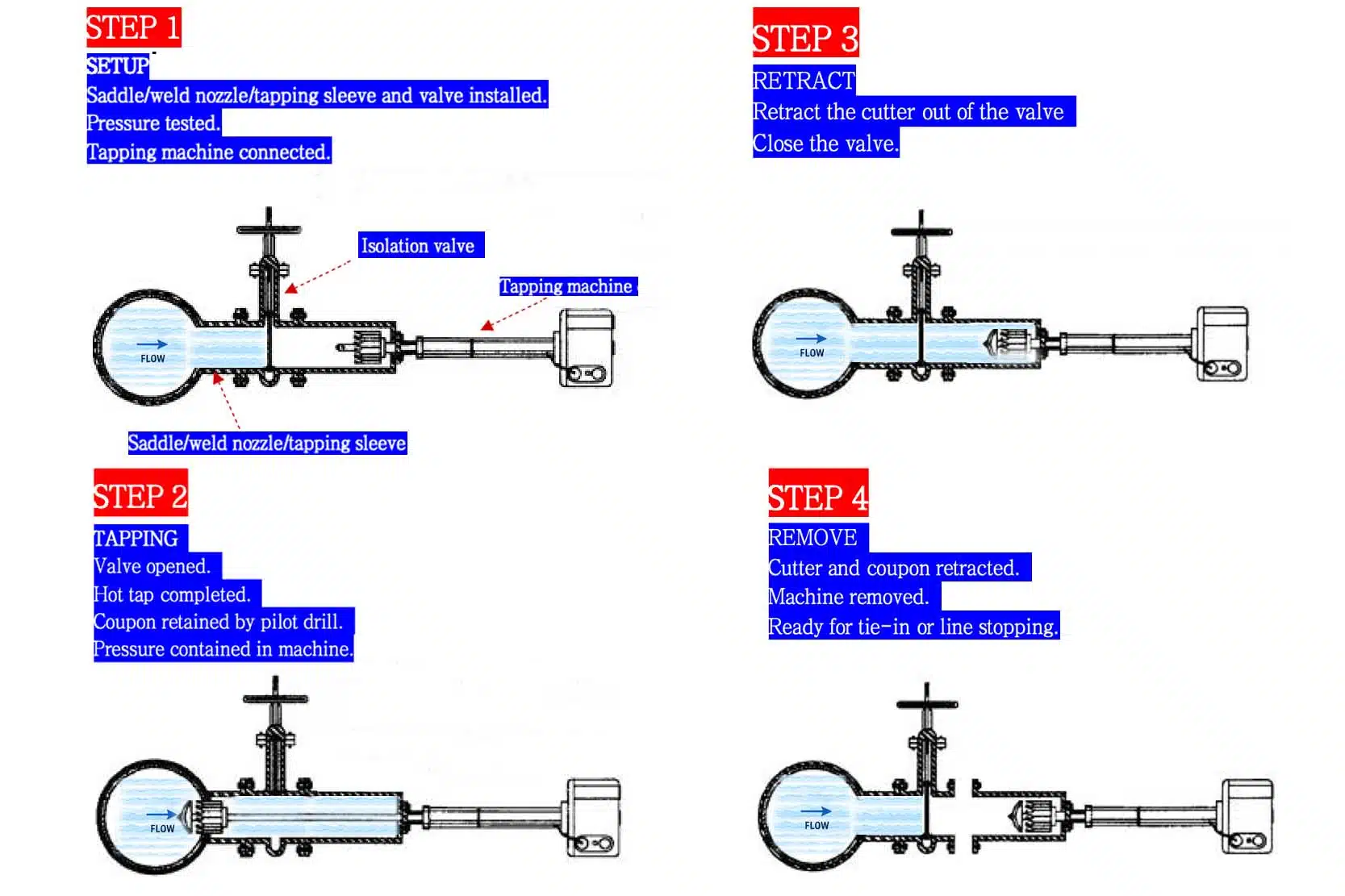
The process involves installing a fitting (saddle or sleeve) and a valve onto the live pipe. A special drilling machine is attached to the valve. The valve is opened, the machine drills through the pipe wall, and the cut piece is retracted.
A successful hot tap is like a well-rehearsed play; every step must be performed in the correct sequence. I remember a project early in my career where a crew rushed the pressure test. They started drilling and discovered a tiny leak in the gasket. They had to stop everything, depressurize the machine, and start over, costing them half a day. That lesson stuck with me: never skip a step.
The Hot Tapping Sequence
- Site Preparation: First, the section of pipe to be tapped is excavated and thoroughly cleaned. Any coating, dirt, or rust must be removed to ensure a good seal. The pipe's wall thickness is also measured with an ultrasonic tool to confirm it can be safely tapped.
- Install the Fitting: The two halves of the tapping saddle or sleeve are placed around the pipe and securely bolted together according to the manufacturer's torque specifications.
- Install the Isolation Valve: The permanent isolation valve is bolted onto the outlet of the tapping fitting. The valve is left in the fully open position.
- Pressure Test: A small test port on the tapping machine or saddle is used to pressurize the space between the pipe and the valve. This test confirms the integrity of all gaskets and seals before drilling begins.
- Mount the Tapping Machine: The tapping machine, with the correct cutter size, is mounted onto the isolation valve.
- Perform the Tap: The operator advances the boring bar until the pilot drill touches the pipe. The machine is turned on, and the cutter slowly drills through the pipe wall.
- Retract the Cutter: Once the cut is complete, the pilot drill retains the piece of cut pipe (the coupon). The operator retracts the boring bar completely, pulling the cutter and the coupon back through the valve.
- Close the Valve: The isolation valve is now closed, sealing off the main pipeline.
- Remove the Machine: The pressure inside the tapping machine is bled off, and the machine can be safely removed from the valve.
- Connect New Line: The new branch line can now be connected to the outlet of the new isolation valve.
What Types of Pipelines Can Be Hot Tapped?
Your project involves a specific pipe material like PVC or HDPE. You're worried that hot tapping might not be compatible and could end up cracking or deforming the pipe.
Hot tapping can be performed on a wide range of pipeline materials. This includes ductile iron, carbon steel, PVC, HDPE, and even asbestos cement pipes. However, the equipment, especially the tapping saddle, must be specifically designed for the pipe material.
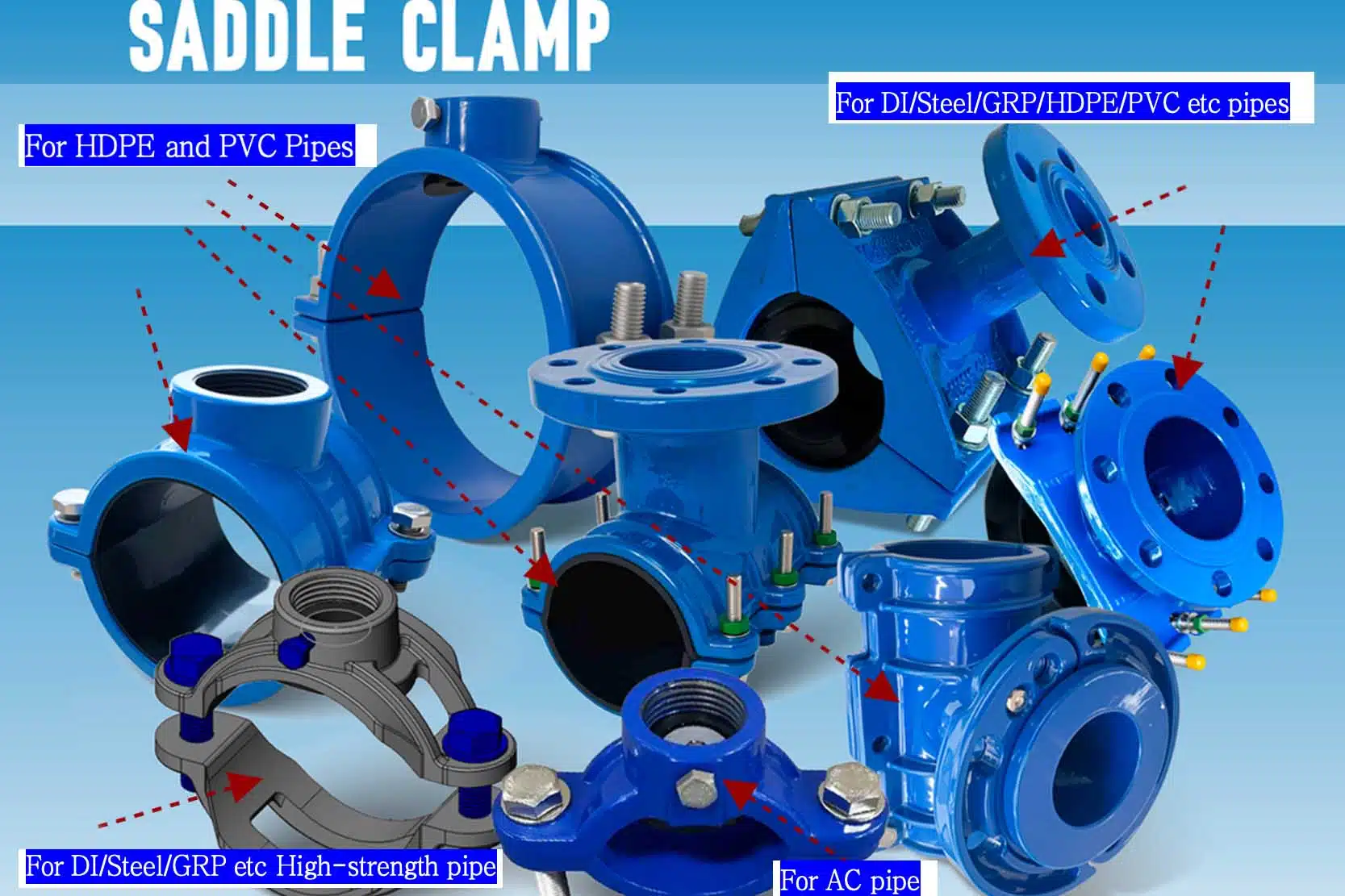
One of the biggest mistakes I see is using a one-size-fits-all approach to hot tapping. Different pipe materials behave very differently under pressure and stress. A saddle designed for a rigid ductile iron pipe could damage a more flexible HDPE pipe. This is where our 30 years of manufacturing and R&D experience really comes into play. We've designed specific solutions tailored to the unique properties of each material.
Matching the Saddle to the Pipe Material
Choosing the right saddle is critical for a secure, long-lasting connection. An incorrect choice can lead to leaks, pipe damage, or a complete failure of the tap.
| Pipe Material | Characteristics | Recommended Saddle Type | Why It Works |
|---|---|---|---|
| Ductile Iron, Steel | Rigid, high strength | Narrow ductile iron saddle or a brass band with a DI head | These saddles provide a high-strength, concentrated clamping force that works well with the pipe's rigidity. |
| HDPE | Flexible, prone to deformation | Wide-strap ductile iron saddle or a full HDPE saddle | The wider base distributes the clamping force over a larger area, preventing the pipe from deforming or "creeping" under pressure. |
| PVC | Rigid but more brittle | PVC saddles or wide-base ductile iron saddles | Like with HDPE, a wider base is crucial to spread the load and prevent stress concentrations that could lead to cracks in the brittle material. |
Hot Tapping vs Shutdown: Which Method Is Better?
You have a choice for your next pipeline connection: a full shutdown or a hot tap. A shutdown seems simpler, but the costs and customer complaints are daunting. Is hot tapping truly better?
In most cases, hot tapping is the better method. It avoids service interruptions, saving the time and money associated with draining, refilling, and purging the system. A shutdown is only necessary for major repairs when hot tapping isn't an option.
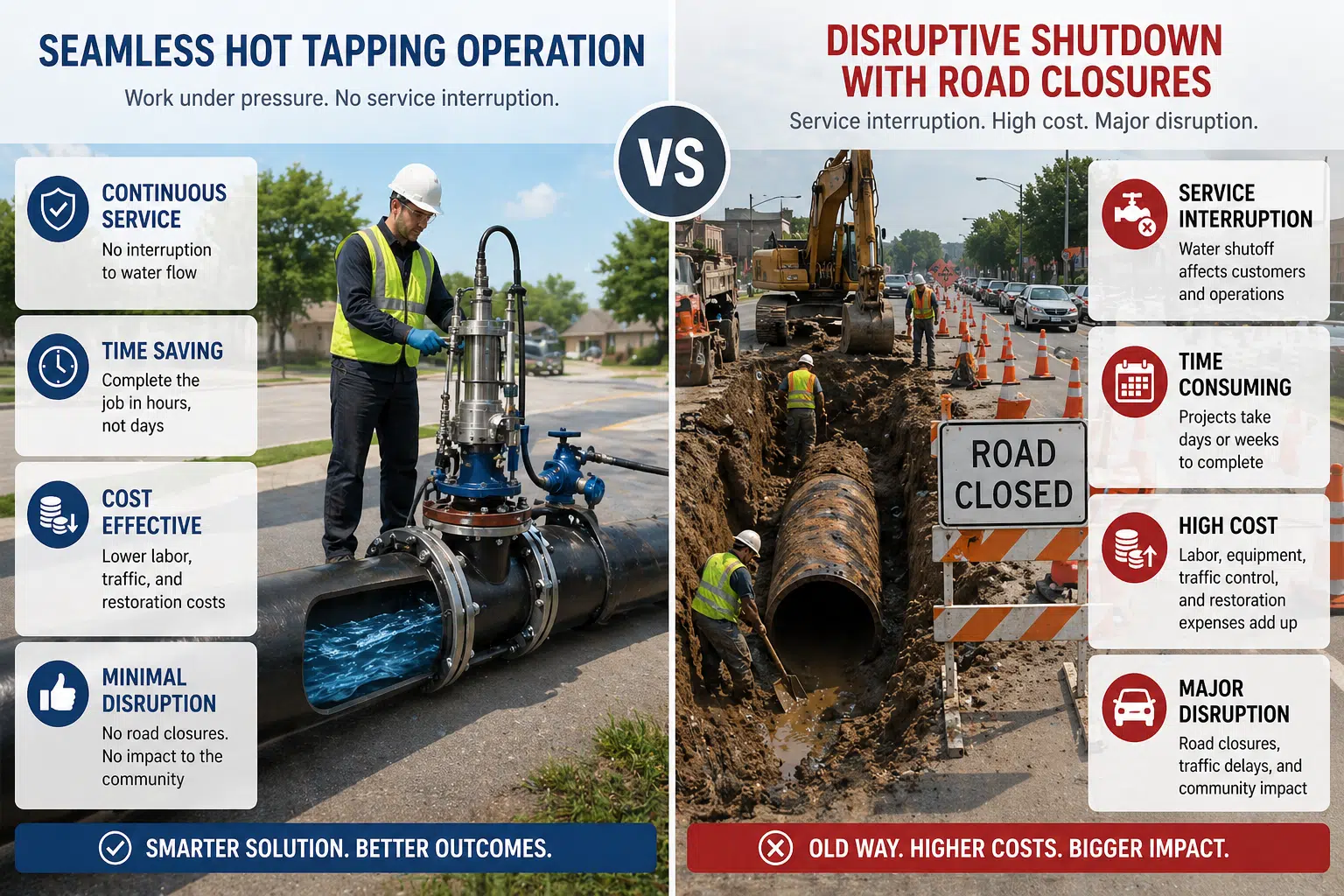
Deciding between a hot tap and a shutdown comes down to analyzing the total cost and impact. A shutdown might seem to have a lower upfront equipment cost, but the hidden costs add up quickly. You have the labor costs for a larger crew, the cost of the lost water, the expense of notifying customers, and potential penalties for service interruption. I once consulted on a project where a city chose a shutdown to save a few thousand dollars on a hot tapping service. The shutdown ran into complications, and the water was off for 24 hours longer than planned, resulting in a flood of angry calls and negative press that far outweighed the initial savings.
Comparing the Two Methods
Hot tapping offers clear advantages for planned connections and extensions. Let's compare them directly.
| Feature | Hot Tapping | System Shutdown |
|---|---|---|
| Service Interruption | None. Water service is continuous. | Complete interruption for a section or entire system. |
| Overall Cost | Lower. Eliminates costs of de-watering, re-filling, and downtime. | High. Includes labor, lost product, and public notification costs. |
| Project Time | Faster. A typical tap can be completed in a few hours. | Slower. Requires days for draining, work, refilling, and testing. |
| Contamination Risk | Very low. The system remains a closed, pressurized loop. | High. The open pipe is exposed to air, soil, and potential contaminants. |
| Customer Impact | Minimal to none. | Significant. Customers are without water for an extended period. |
What are the Common Mistakes and Risks in Hot Tapping?
Hot tapping is a precise operation. Even a small mistake can have big consequences, from a failed connection to a catastrophic leak, putting your project and personnel at risk.
Common mistakes include using the wrong equipment for the pipe material, improper installation of the saddle, skipping the pressure test, and operator error. The biggest risks involve leaks from poor seals, equipment failure, and potential injury if safety protocols are ignored.
Over three decades, I've seen just about everything that can go wrong on a hot tapping job. Almost every failure can be traced back to a preventable human error. One of the most common is improper bolt tightening on the saddle. If the bolts are too loose, the gasket won't seal. If they are too tight, you can crack the saddle or even the pipe itself. This is why following the manufacturer's torque specifications is not a suggestion—it's a requirement.
How to Avoid Common Pitfalls
- Mistake 1: Incorrect Saddle Selection. As we've discussed, using a narrow saddle for ductile iron pipe on a PVC pipe is a recipe for disaster. Solution: Always verify the pipe material and consult with your supplier to get the correctly designed saddle for the application.
- Mistake 2: Poor Surface Preparation. Trying to mount a saddle on a rusty or dirty pipe will compromise the seal. Solution: The pipe surface must be cleaned down to the bare metal where the gasket will sit.
- Mistake 3: Skipping the Pressure Test. This is a critical safety step to verify the seals before you drill. Solution: Always perform a pressure test on the saddle/valve assembly to a pressure higher than the pipeline's operating pressure.
- Risk: The "Coupon Drop". The piece of pipe that is cut out is called a coupon. If the pilot drill isn't engaged properly, this coupon can fall into the pipeline, causing a blockage downstream. Solution: Ensure the tapping machine has a reliable coupon retention system on its pilot drill.
How to Choose the Right Hot Tapping Solution for Your Project?
Your project is unique. How do you choose the perfect tapping saddle and valve from so many options? The wrong choice could lead to leaks and long-term reliability issues down the road.
To choose the right solution, you must consider the pipe material, diameter, operating pressure, and the type of branch connection thread. Consulting with an experienced manufacturer is key to selecting the correct saddle, valve, and gasket materials for your specific application.
Choosing the right components goes beyond just matching the pipe diameter. We've had clients come to us after experiencing persistent problems with products from other suppliers. A common issue is thread corrosion. Standard steel/iron threads on a tapping saddle can rust over time, making it impossible to service the valve later. This is why we apply a protective electrophoretic coating (e-coating) to all our threads. It’s a small detail, but it prevents seizing and ensures long-term serviceability.
Key Technical Considerations
- Outlet Connection Type: The way your valve seals to the saddle is critical. For metric thread outlets, the seal is made by a gasket compressed between the valve and the saddle. We use higher hardness gaskets or add support rings to prevent the gasket from deforming under pressure. For self-sealing threads like BSP or NPT, the seal is in the threads themselves. For these, we conduct go/no-go gauge testing on every single thread to guarantee a perfect fit and seal.
- Long-Term Durability: Think about the environment. Is the soil corrosive? Will the connection be exposed to the elements? Our e-coating process is designed to protect against this, preventing rust and ensuring the connection remains strong for decades.
- Partner with an Expert: The best way to ensure you have the right solution is to work with a manufacturer who understands these details. With our 30 years of experience and OEM/ODM capabilities, we can help you specify the exact product for your project, ensuring safety, reliability, and long-term performance.
Conclusion
Hot tapping is a safe, efficient, and cost-effective method for modifying live pipelines. With the right equipment, trained professionals, and proper procedures, you can avoid disruptive and expensive shutdowns.
