Diaphragm Electric Control Valve Manufacturer
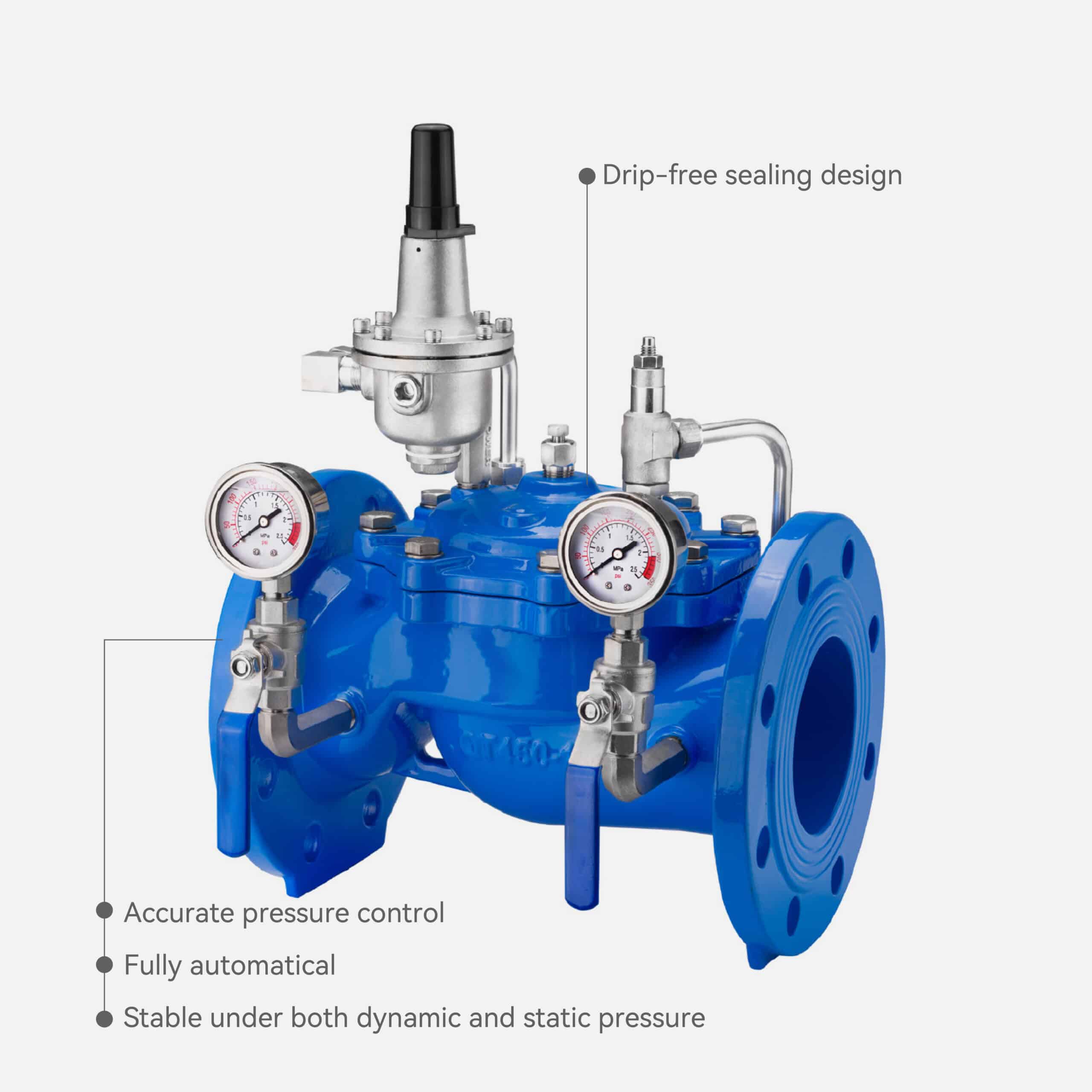
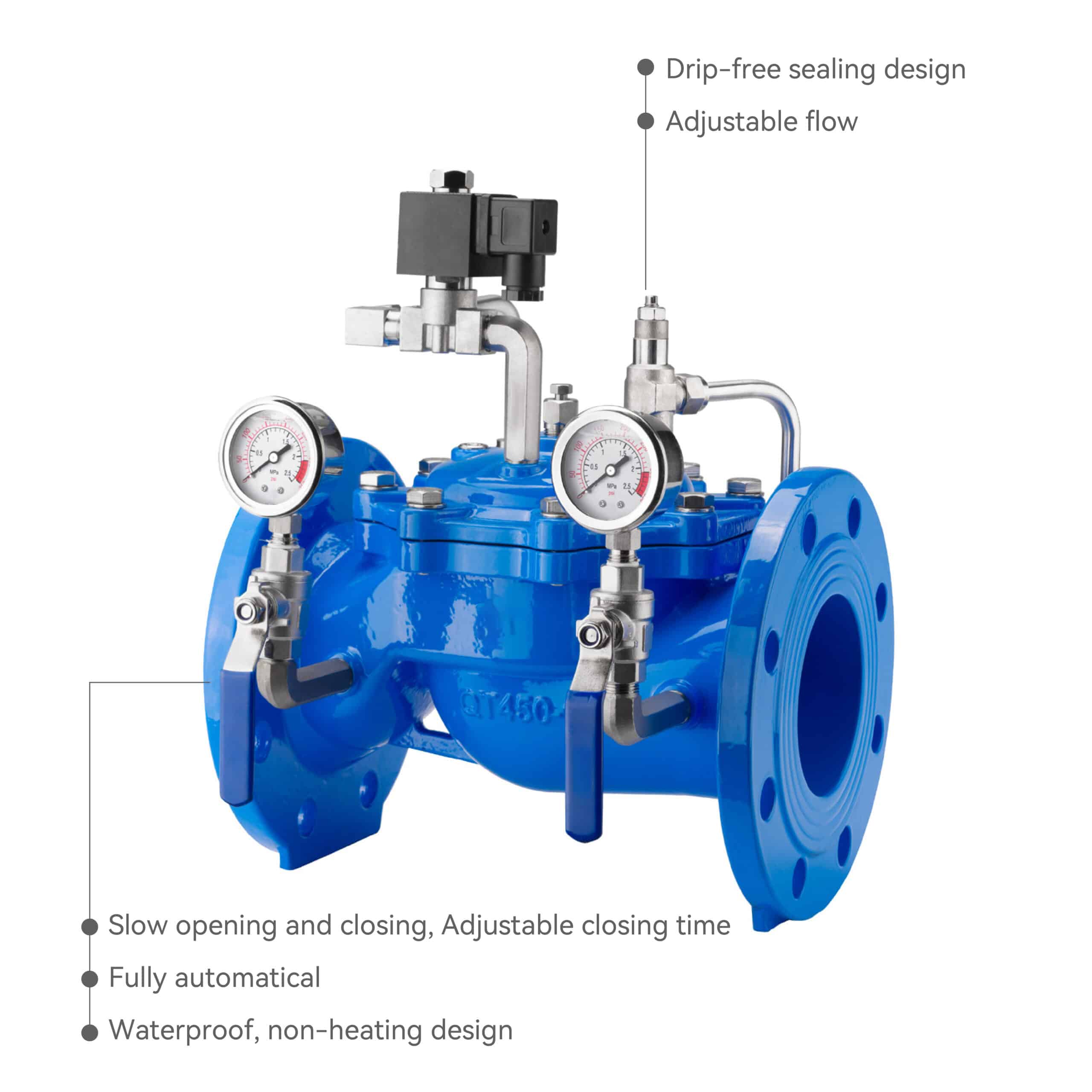
Electric control valve is an automatic hydraulic valve equipped with a pilot solenoid valve.
By receiving simple electrical signals, it can remotely open or close the pipeline, providing fast response, accurate pressure control, and stable system operation.
It is widely used in municipal water networks, pump stations, and building water supply systems that require intelligent and reliable automation.
Feature
Technical Parameters
● Nominal Diameter: DN40–DN800
● Sealing Material: EPDM or NBR
● Working Temperature: ≤ 80°C
● Suitable Medium: Clean water
● Valve Body Material: Ductile iron, brass, 304/316 stainless steel
● Closing Time:≤ DN100: 3–6 seconds; DN125–200: 4–8 seconds; DN250–300: 6–12 seconds; DN350–800: 12–30 seconds
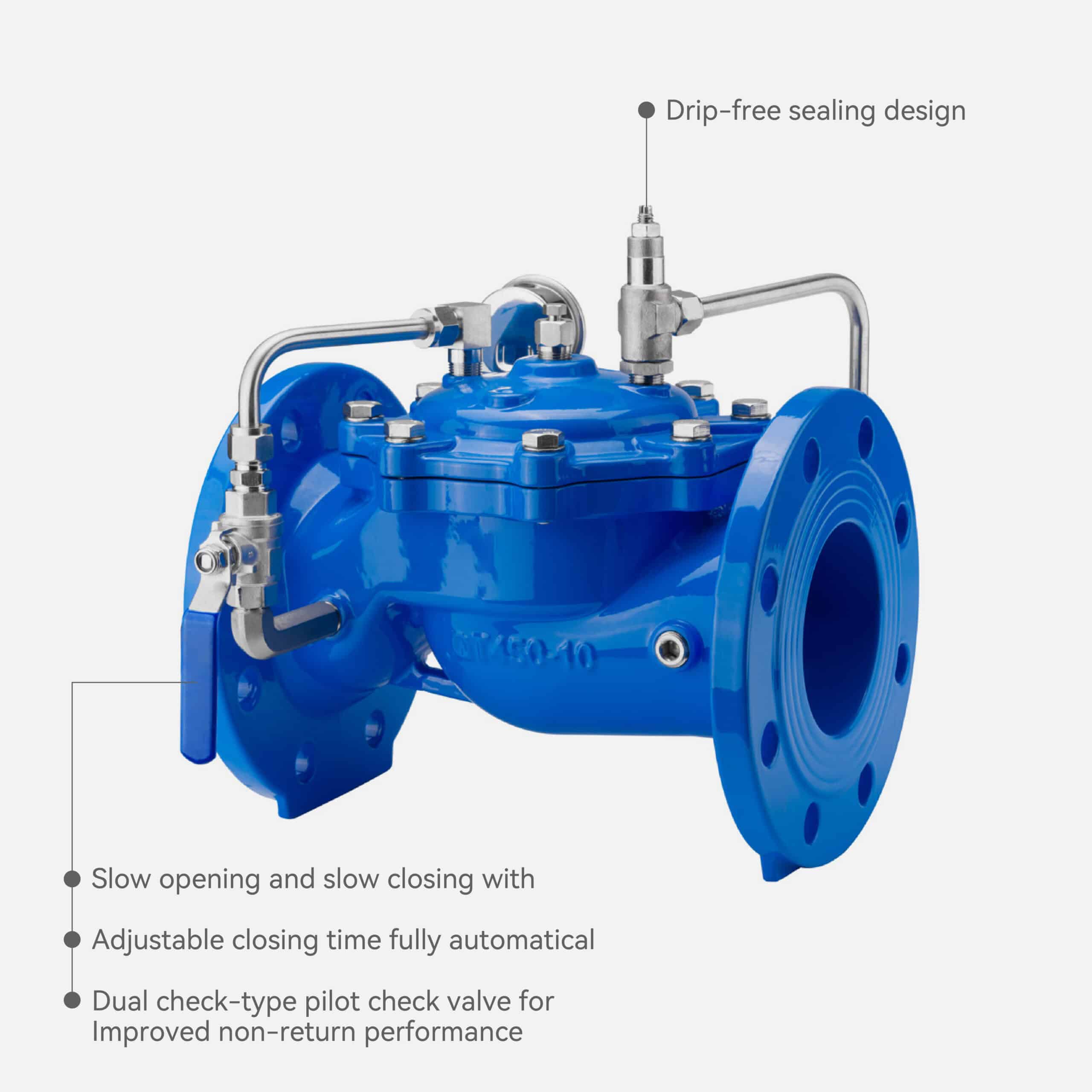
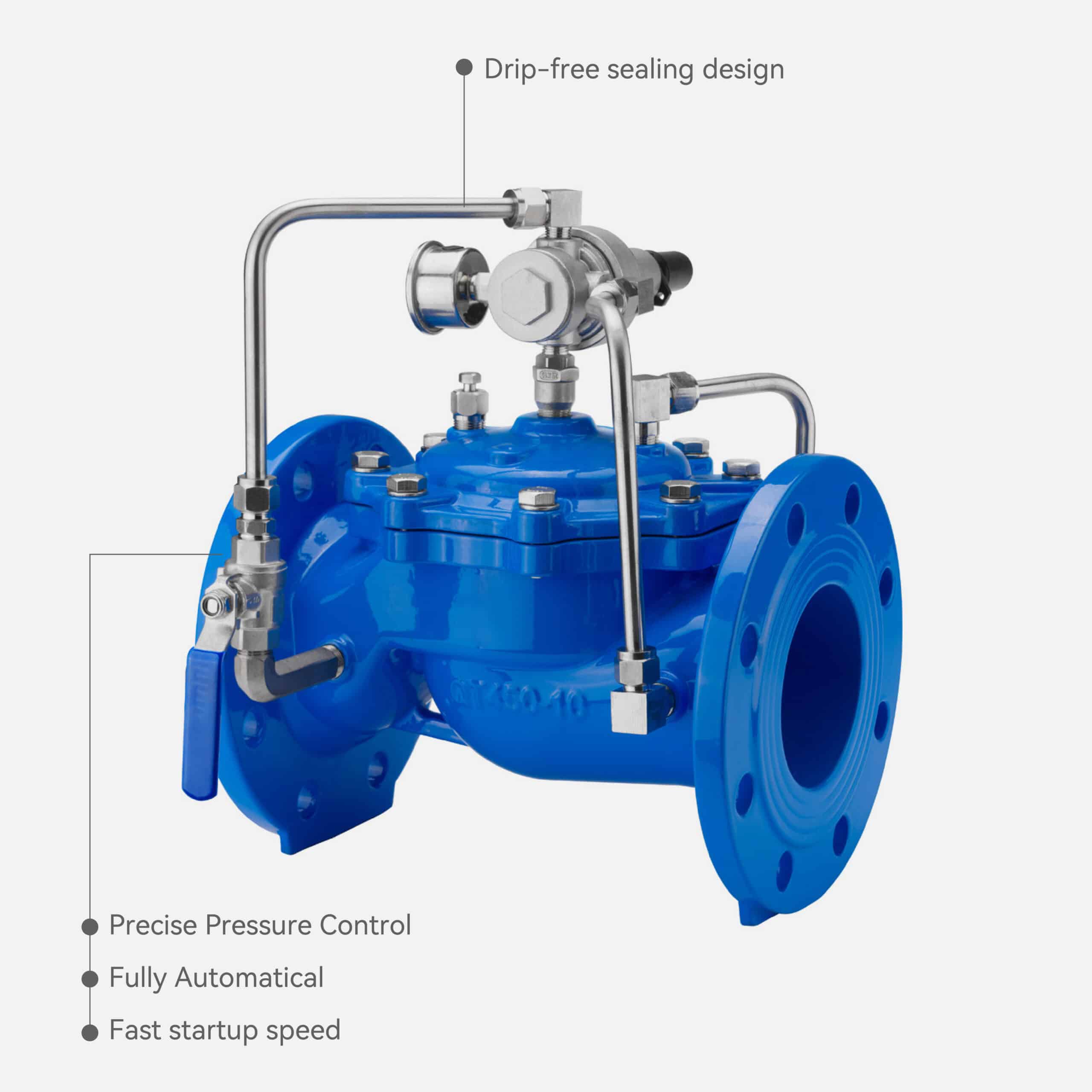
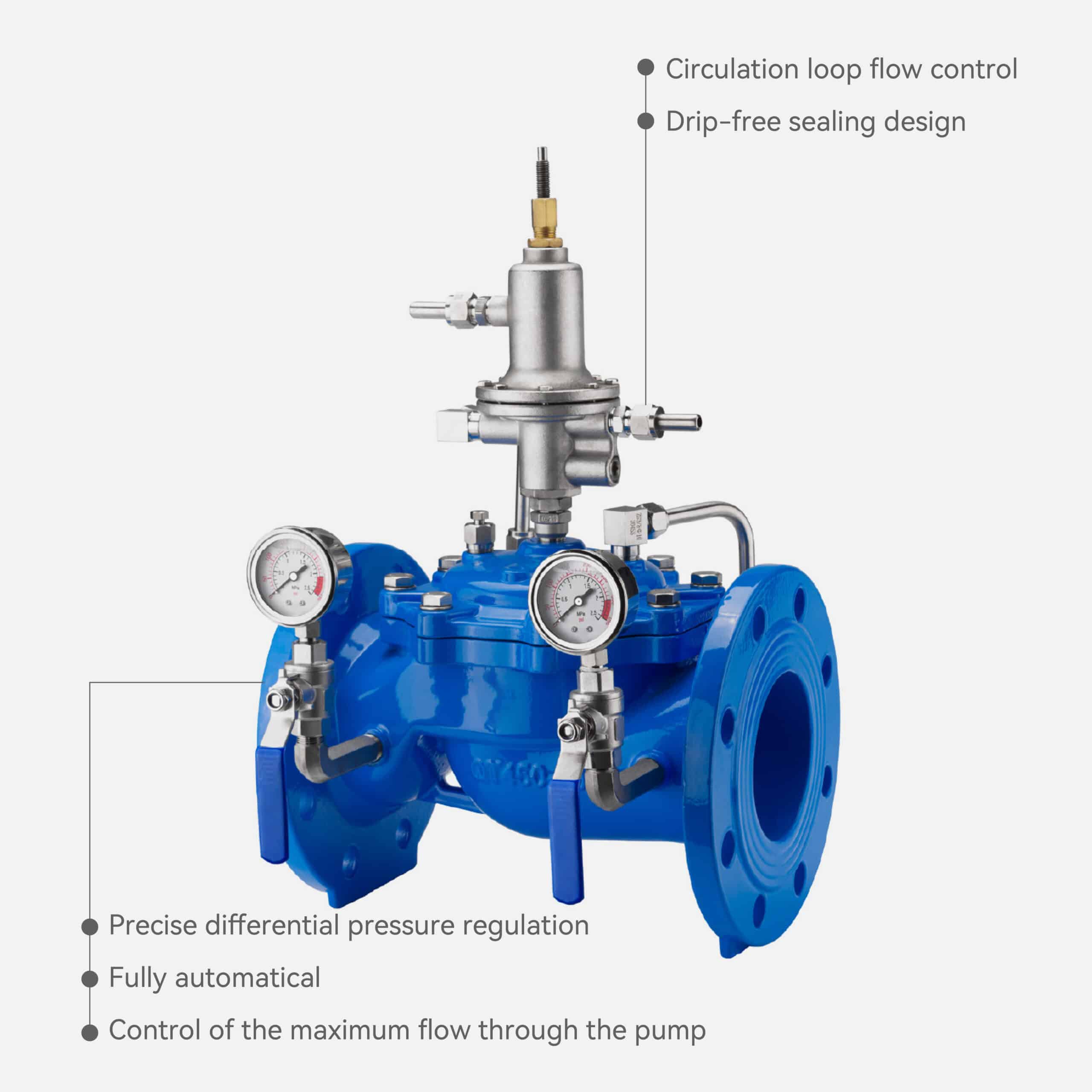
● Drip-free sealing design
● Adjustable Flow
● Slow Opening and closing, Adjustable closing time
● Fully Automatical
● Waterproof, non-heating design
Working Principle
This valve operates through a simple and reliable control system that combines electric signals with hydraulic power.When your control system (PLC, pump control panel, remote station, or smart water platform) sends an electrical signal to the pilot solenoid valve, the solenoid immediately changes its position:When energized, it opens the pilot path.When de-energized , it closes the pilot path.
This pilot action allows water pressure to enter or release the control chamber inside the hydraulic main valve.
As the pressure in this chamber changes, the diaphragm moves up or down, automatically opening or closing the main valve.
The electric signal only controls the pilot solenoid, the water pressure in the pipeline actually drives the valve movement
So the valve does not use a motorized electric actuator—it uses the pipeline’s own hydraulic pressure, making operation faster, more stable, more reliable and suitable for large diameters (DN40–DN800)
Remote Control Capability
_
If you send a remote electrical signal, the valve will open or close automatically.
This allows remote start/stop of water supply, pressure zone switching, pump system linkage, automatic control through PLC/SCADA
Automatic Pressure Regulation
_
The diaphragm design enables the valve to respond to pressure changes in the pipeline.
When pressure rises or drops, the hydraulic balance inside the main valve adjusts the diaphragm position, helping maintain stable flow and pressure.
So the valve can open fully when needed, close tightly when required, maintain smooth and stable operation
Response Speed
_
Because the valve is hydraulically driven, the response is fast,
Small sizes ≤ DN100: 3–6 seconds,
Larger sizes DN350–800: 12–30 seconds,
This ensures quick control even in large pipe systems.
If your system sends an electric signal, the valve will receive the signal through the solenoid, use water pressure to move the diaphragm, open or close quickly and accurately, maintain stable pressure automatically.
No electric actuator required, no manual operation needed—just simple, reliable, remote hydraulic control.
Application and Function
Applications
This valve is widely used in systems that require automatic and reliable pressure control, especially where remote operation and stable water supply are critical.
Common applications include: Municipal water supply networks, pressure zoning, maintaining stable supply during peak demand, High-rise and large building water systems, pressure stabilization, pressure reduction, multi-zone distribution, Pump stations and booster pump rooms, automatic pressure control, coordinated start/stop with pumps, Pipeline pressure stabilization systems, preventing pressure fluctuations caused by load changes, Systems requiring backflow and surge protection, preventing reverse flow when pumps stop, reducing water hammer and impact, Remote monitoring and smart water management, SCADA / PLC / smart water platforms, remote operation and status monitoring
Key Functions
In these systems, the valve provides multiple key control functions that help ensure safe, stable, and efficient operation:
1, Remote Electric Control
_
Open or close the pipeline simply by sending an electric signal , No need for onsite manual operation
2,Automatic Pressure Adjustment
_
Automatically regulates valve opening based on system pressure, Responds to pressure changes in real time
3, Maintain a Set Pressure
_
Keeps outlet or system pressure stable at the preset value, Prevents pressure drop during high demand, Prevents overpressure during low demand
4, Pipeline Pressure Stabilization
_
Smooths out pressure fluctuations, Ensures consistent water supply to downstream users
5, Overpressure / Low Pressure Protection
_
Prevents damage to pipes, equipment, and fixtures, Ensures safe operating pressure ranges
6, Pump System Integration
_
Works with pump control signals, Automatically opens when pumps start, Automatically closes when pumps stop, Reduces surge and backflow when pumps shut down
7, Firefighting System Linkage
_
Can open automatically when fire pumps start , Ensures instant and stable pressure for fire protection systems
With this valve installed, your system can run automatically without manual intervention, maintain stable pressure in all operating conditions, be controlled remotely through SCADA/PLC, protect pipelines and equipment from pressure damage, improve reliability and efficiency of water supply
Selection Guide
To ensure the valve works properly and delivers stable pressure control, it is important to select the correct configuration based on your system requirements. The following key factors will help you choose the most suitable model:
1. Structure & Size
_
Choose the valve size and structure according to your pipeline:
Valve body size: DN40–DN800
Connection type: Flanged connection (standard for water supply systems)
Diaphragm structure: Hydraulic diaphragm main valve for automatic pressure control
Larger diameters (DN250–DN800) are recommended for municipal networks and pump stations
Smaller diameters (DN40–DN150) are suitable for building water systems
2. Pressure Requirements
_
Confirm the working pressure and control range of your system:
Working pressure rating: PN10 / PN16 / PN25
Pressure setting range: e.g., 0.2–0.9 MPa
If your pipeline pressure is high or fluctuates greatly, choose a higher pressure rating (PN16 or PN25) for improved safety and durability.
3. Solenoid Valve Configuration
_
The solenoid valve determines how the valve receives and responds to control signals.
Select based on your control system:
Voltage: AC220V or DC24V
Operation type: Normally open or normally closed
Signal control: electric signal on/off or remote control system
For PLC / SCADA systems, DC24V is commonly used
For standard building water systems, AC220V is more typical
4. Valve Body Material
_
Choose according to installation environment and medium characteristics:
Ductile iron: most common, cost-effective, suitable for clean water supply
Stainless steel (304/316): corrosion-resistant, suitable for seawater or chemical environments
Brass: suitable for small diameters and indoor building systems
For coastal areas or seawater applications, stainless steel or special coatings are recommended
5. Sealing Material
_
The sealing material affects durability and compatibility:
EPDM: suitable for clean water and drinking water
NBR: suitable for water containing oil or slight chemical content
If the medium contains oil or additives, NBR is preferred.
6. Water Quality / Medium
_
Select according to actual water conditions:
Clean water
Slightly polluted water
Cooling water
Seawater
For seawater or corrosive media, choose stainless steel + corrosion-resistant coating + NBR sealing
For clean municipal water, ductile iron + EPDM is sufficient
Quick Selection Tips for you
_
If your system requires: Remote electric control, Stable outlet pressure, Automatic adjustment, Pump linkage, SCADA / PLC integration
Then this valve configuration is suitable.
Simple Selection Example
_
If your project is:High-rise building water supply, DN150 pipeline, System pressure 0.6 MPa, Clean water, PLC control,
Recommended selection:DN150, PN16, Ductile iron body, EPDM seal, DC24V normally closed solenoid valve, Flanged connection
Installation Guide
Step 1
Get the Pipe Ready
_
Before you put the valve in, you need to make sure the pipe is clean, get the sand, welding slag, rust, and junk out of the pipe, clean the filter (strainer)
Please note dirty pipes are the number one reason valves don’t work.
Step 2
Check the Way the Valve Goes In
_
Find the arrow on the valve body that shows which way the water goes, put the valve in the way the arrow shows, please don’t put it in backward
You can put the valve in: sideways, up and down.
Step3
Put in the Stuff Upstream
_
Put the stuff in this order:
3,Electric control valve
The shut-off valve lets you turn the water off when you work on the valve, and the filter keeps junk out of the valve.
Step 4
Put in the Stuff Downstream
_
After the valve, put in:Pressure gauge, Shut-off valve (if you want)
The pressure gauge helps you adjust the valve, figure out what’s wrong and watch the pressure.
Step 5
Give Yourself Room
_
Make sure you have room around ball valve handles, needle valve handwheels, solenoid valve wiring and tools to lift the valve (when you work on it).
If you put the valve in a hole or a pit, please leave room around the valve and make sure you can lift the valve out to work on it
Step 6
Check the Valve
_
Before you fill the system with water, please make sure all the little ball valves on the control tubing are OPEN, make sure the needle valve isn’t all the way closed, check the solenoid valve wiring and make sure all the connections are tight
Step 7
Fill the System Slowly
_
Open the shut-off valve upstream slowly, Let the valve fill with water slowly, Don’t hit the valve with a big blast of pressure, then look for leaks
If you fill the valve too fast, you can make the water hammer and break stuff.
Step 8
Set the Pressure
_
Use the pilot valve or needle valve to adjust the pressure, if you turn it clockwise, then pressure goes up. If you turn it counterclockwise, then pressure goes down.
Adjust it slowly until the pressure at the outlet stays the same.
Step 9
Adjust the Speed
_
If the valve opens or closes too fast , you need close the needle valve a little
If the valve is too slow or doesn’t move, you need open the needle valve a little
To assure the valve moves smoothly, no shaking, no noise and no water hammer.
Step 10
Test the Remote Control
_
Send an electrical signal to the solenoid valve, if signal ON, then the valve should open. If signal OFF, then the valve should close.
If it doesn’t, then please check the power, check the wiring and check the little ball valves on the control tubing
Then you finish the installation until now.
If you put the valve in right, the valve will:
1, open and close when you tell it to
2, keep the pressure steady by itself
3, open and close quickly and smoothly
4, keep the pressure from breaking the pipe
Please do pay attention to below common mistakes:
1, putting it in backward
2, no filter
3, not flushing the pipe
4, closing the needle valve
5, no shut-off valve to work on the valve
6, filling the system too fast
7, no pressure gauge downstream
Troubleshooting / FAQ
| Problem | Possible Causes | Solutions |
|---|---|---|
| Valve Won’t Open | No power | Check power and wiring |
| Coil bad | Test coil | |
| Pilot ball valves closed | Open pilot ball valves | |
| Filter dirty | Clean filter | |
| Pilot passages clogged | Clean pilot passages | |
| Needle valve closed | Open needle valve a little | |
| Inlet pressure low | Make sure inlet pressure is good | |
| Valve Opens Slow | Needle valve too closed | Open needle valve a little |
| Filter dirty | Clean filter | |
| Air in control chamber | Let air out | |
| Pilot tubing blocked | Check pilot tubing | |
| Inlet pressure low | Make sure inlet pressure is good | |
| Valve Opens Fast / Water Hammer | Needle valve open | Close needle valve a little |
| Pilot flow too big | Reduce pilot flow | |
| High pressure difference | Open upstream valve slowly | |
| Valve Won’t Close / Closes Slow | Needle valve too open | Close needle valve a little |
| Junk under seat | Flush system | |
| Pilot passages blocked | Clean pilot passages | |
| Coil stuck open | Check coil | |
| Diaphragm bad | Replace diaphragm | |
| Pressure Bounces Around | Needle valve not set right | Fine-tune needle valve |
| Filter dirty | Clean filter | |
| Air in pipe | Get air out | |
| Pump starting and stopping | Stabilize pump control | |
| Diaphragm worn out | Replace diaphragm | |
| Solenoid Has Power But Valve Won’t Move | Coil burned up | Check voltage |
| Wrong voltage | Tighten wiring | |
| Wiring loose | Test coil | |
| Manual override stuck | Release manual override | |
| Pilot valves closed | Open pilot valves | |
| Pilot orifice blocked | Clean orifice | |
| Valve Vibrates / Hums / Makes Noise | Too much flow | Close needle valve a little |
| High pressure difference | Reduce flow | |
| Needle valve too open | Adjust pressure range | |
| Air in system | Get air out | |
| Cavitation | ||
| Valve Leaks / Can’t Hold Pressure | Junk on seat | Flush and clean seat |
| Seat or diaphragm bad | Replace diaphragm/seat | |
| Pilot valve leaking | Check pilot valve | |
| Needle valve too open | Close needle valve a little | |
| Diaphragm Bad | Valve won’t close | Replace diaphragm |
| Slow to respond | Get better filter | |
| Can’t hold pressure | Clean pilot passages | |
| Water leaks from bonnet | Keep up with maintenance | |
| Bounces around a lot | Quick Check Before You Call for Help |
Most of the time, you can fix it by checking Filter clean, Needle valve position, Pilot ball valves open, Right electrical signal, Valve in the right way and Clean pipe.
Price
The price of an electric pressure control valve can vary depending on configuration and system requirements.
The main factors that affect pricing include:
1. Pressure Rating (PN10 / PN16 / PN25)
_
Higher pressure ratings require stronger materials and thicker valve bodies, which increases cost.
PN10 → lowest price,
PN16 → medium price,
PN25 → highest price,
PN16 is usually 10–20% higher than PN10, PN25 may be 20–40% higher depending on size
If your system pressure is stable and below 1.0 MPa, PN10 or PN16 is usually sufficient.
2. Solenoid Valve Configuration
_
The solenoid valve and control components have a direct impact on price.
Price increases when Control voltage changes (e.g., AC220V → DC24V industrial grade),
Fail-safe design required (normally closed/ normally open),
Explosion-proof solenoid needed,
Stainless steel solenoid required or With signal feedback.
Typical price impact is standard AC220V solenoid → base price,
DC24V industrial solenoid → +5–15%,
Explosion-proof or stainless steel solenoid → +20–40%
3. Valve Body Material
_
Material selection is one of the biggest price differences.
Price ranking (low → high):
Ductile Iron (DI) < Brass < Stainless Steel 304 < Stainless Steel 316
stainless steel requires higher raw material cost , machining and corrosion resistance standards are higher
Typical impact:
Stainless steel versions may be 1.5–3 times the price of ductile iron
Brass options are mainly for small sizes and indoor applications
4. Sealing Material
_
EPDM (for clean water) → standard price
NBR (for water containing oil or chemicals) → slightly higher
5. Size (DN40–DN800)
_
Larger sizes require more material, bigger diaphragm, stronger body casting and higher machining cost, So price increases significantly with diameter.
6. OEM / Custom Design
_
OEM and customization are available and higher for price.
We can provide OEM branding (logo, nameplate, packaging), Custom pressure range, Custom connection standards (flange drilling: EN / ANSI / JIS), Special coatings for seawater / corrosive environments, Stainless steel or duplex versions, Customized control logic (fire system linkage, pump control, remote automation) etc.
Customization may increase cost depending on requirements, especially for non-standard sizes, special coatings, special control systems or customized pilot assemblies
Even if two valves look the same, price differences can come from diaphragm quality and thickness, solenoid brand and grade, coating type and corrosion resistance, machining accuracy, pressure testing standards, internal flow design and assembly quality.
Higher-quality configurations offer longer service life, faster response, fewer failures and lower maintenance cost.
To get an accurate price, please provide valve size (DN), pressure rating (PN), medium (water / seawater / oil-containing water), working pressure, control voltage, installation environment.We will recommend the most suitable and cost-effective configuration.