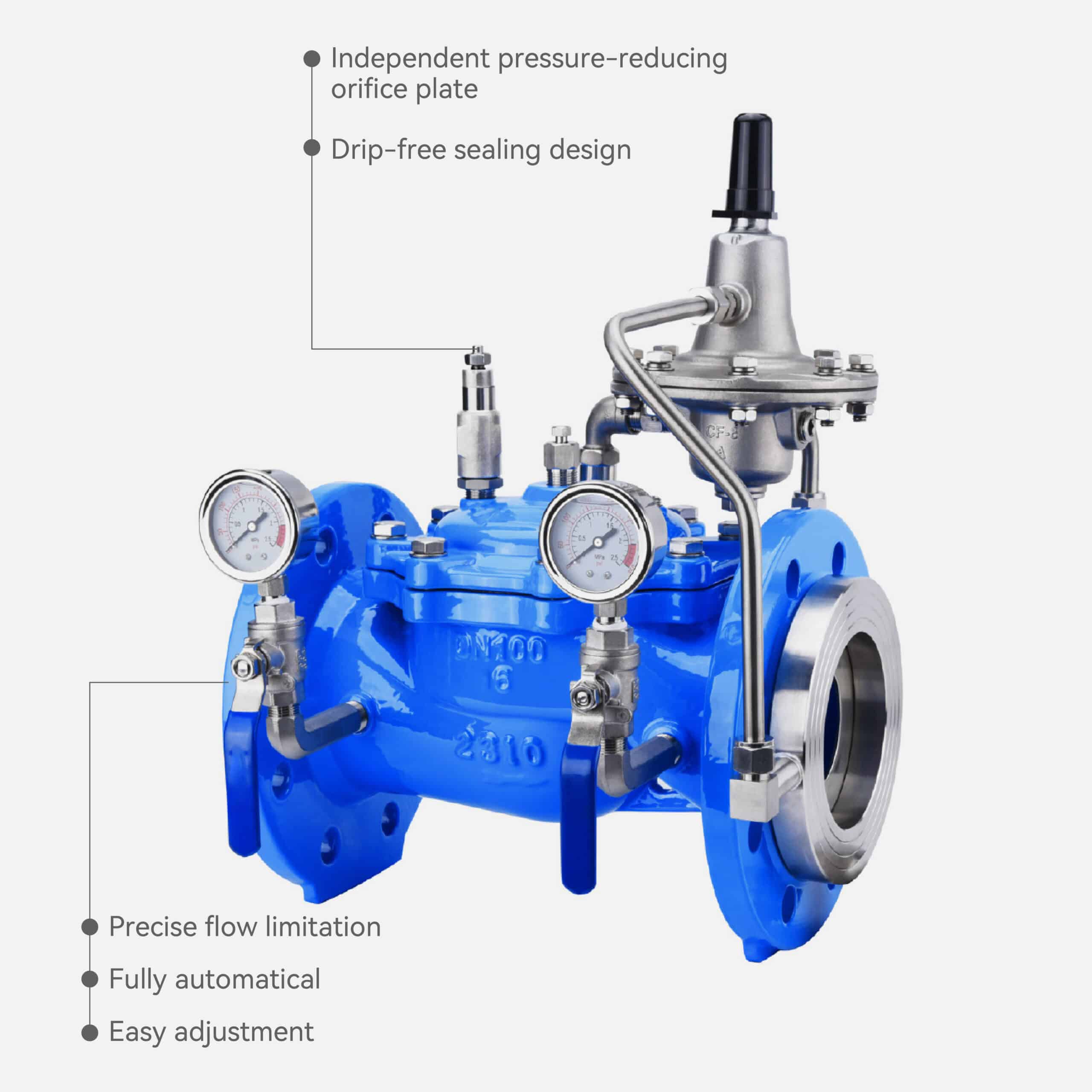
Pressure Control Valve
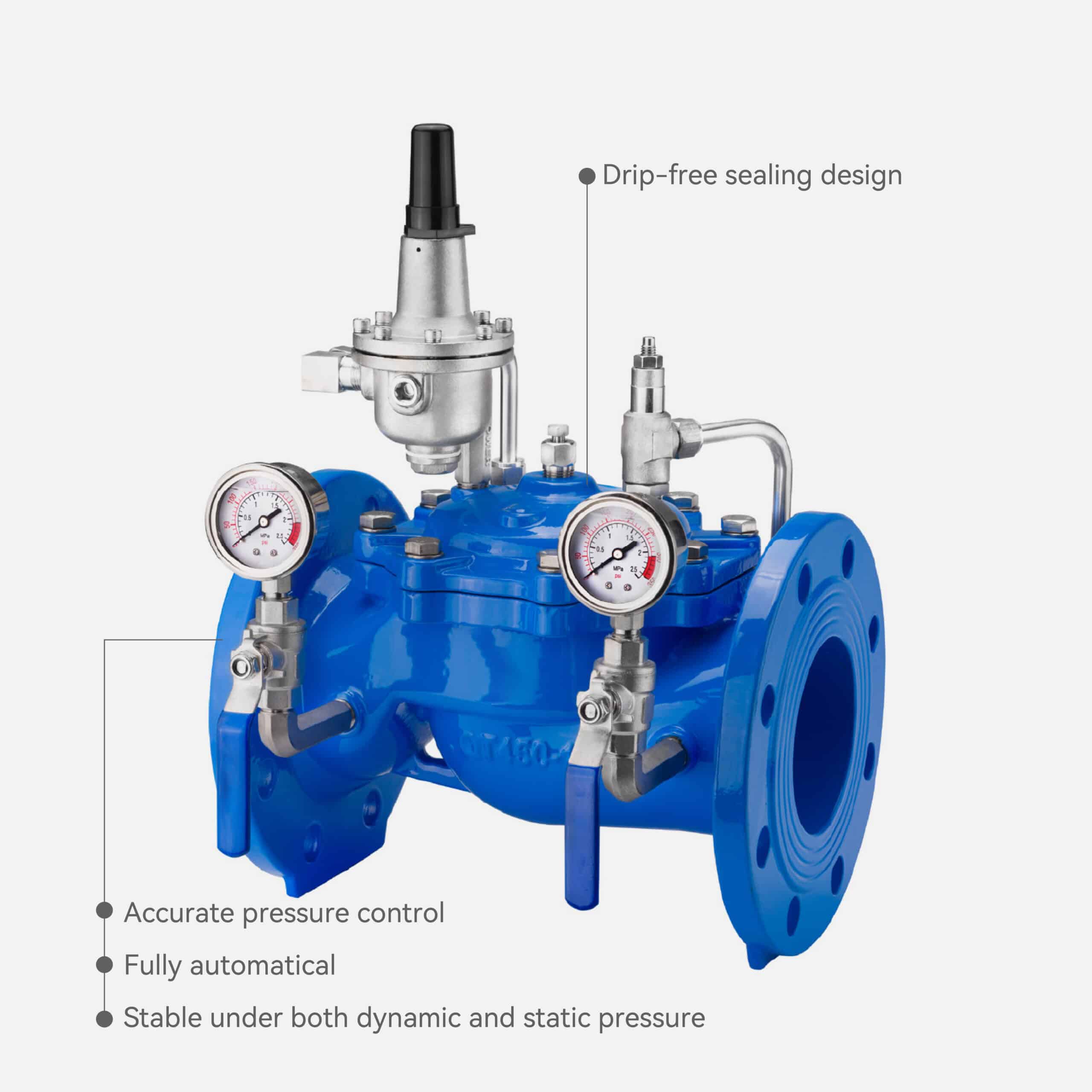
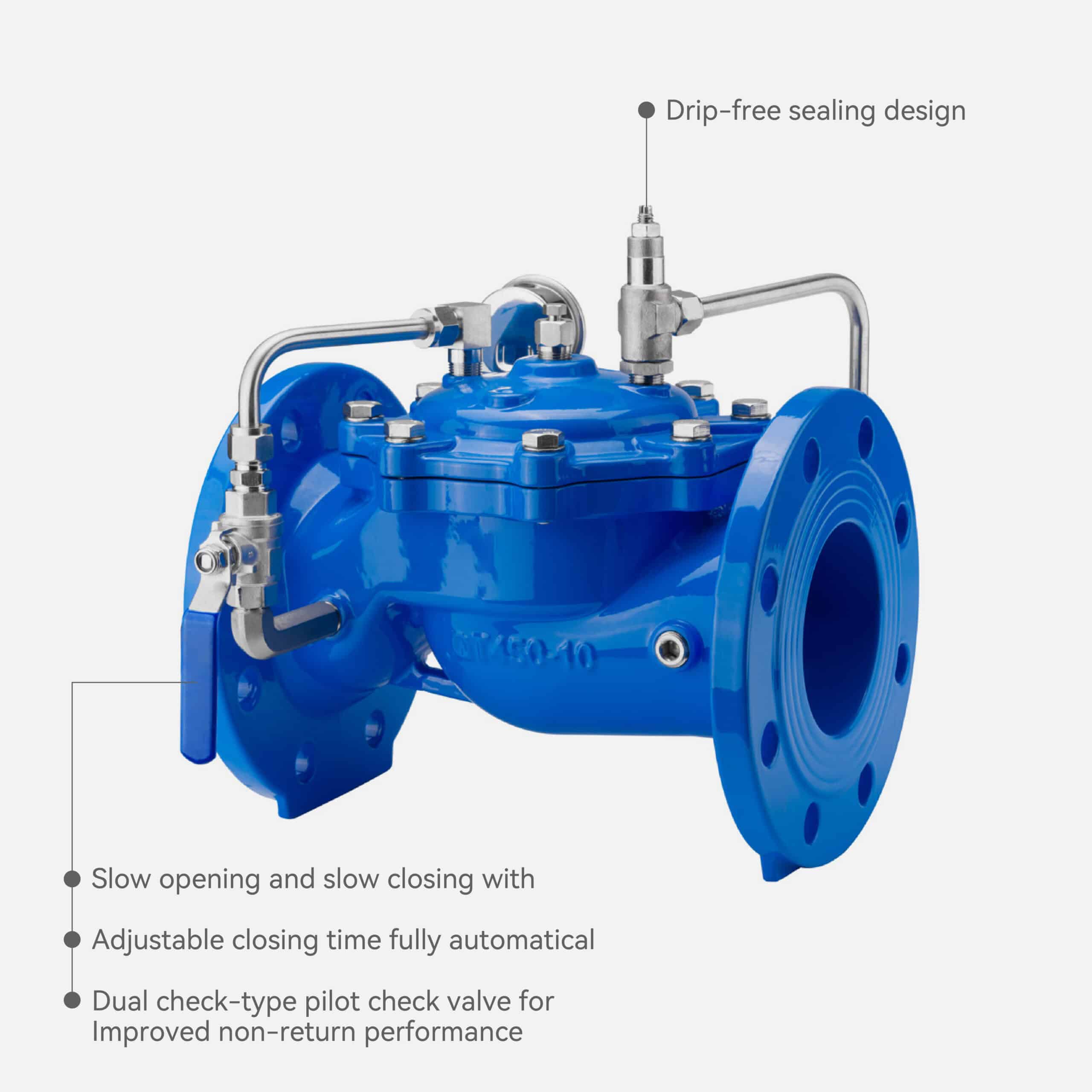
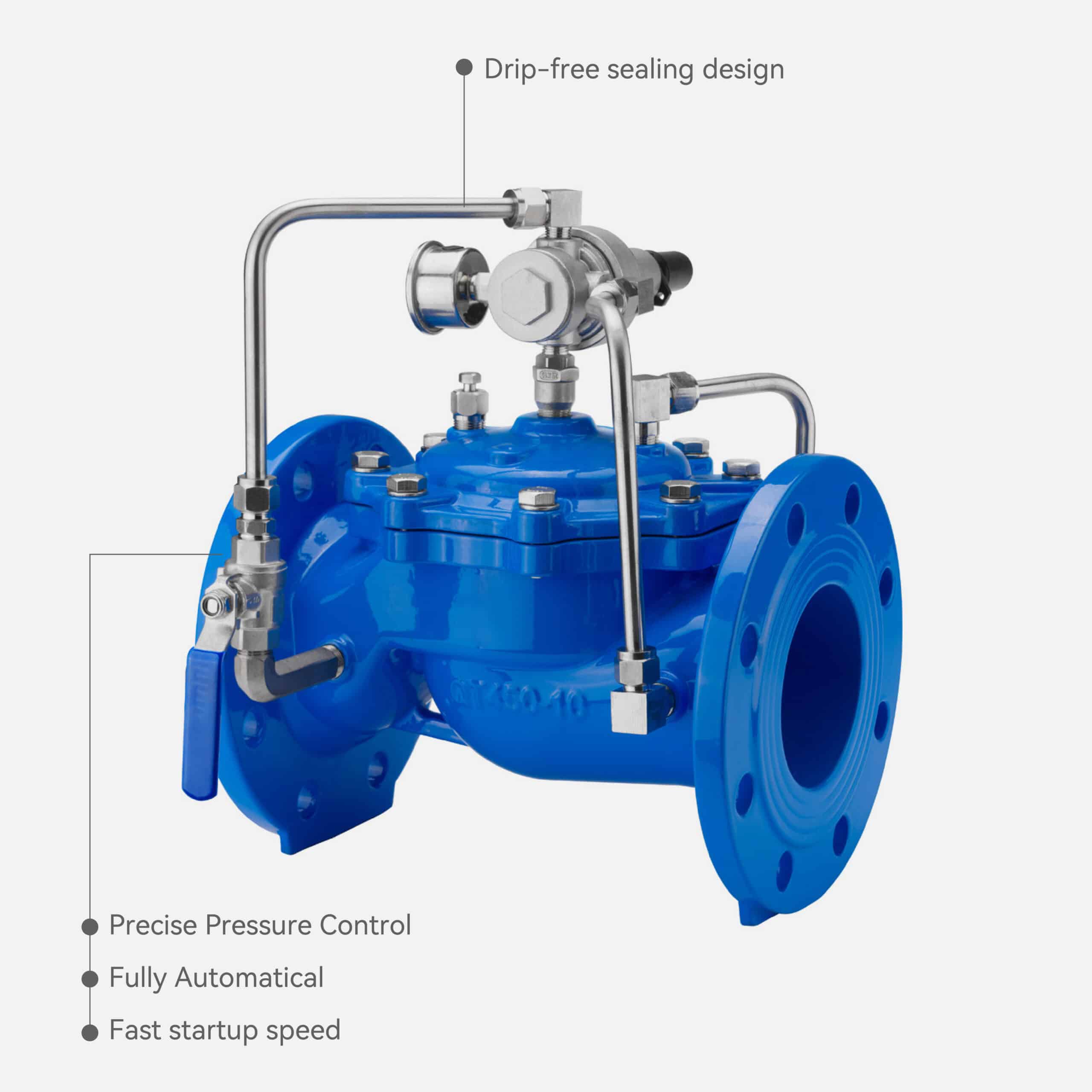
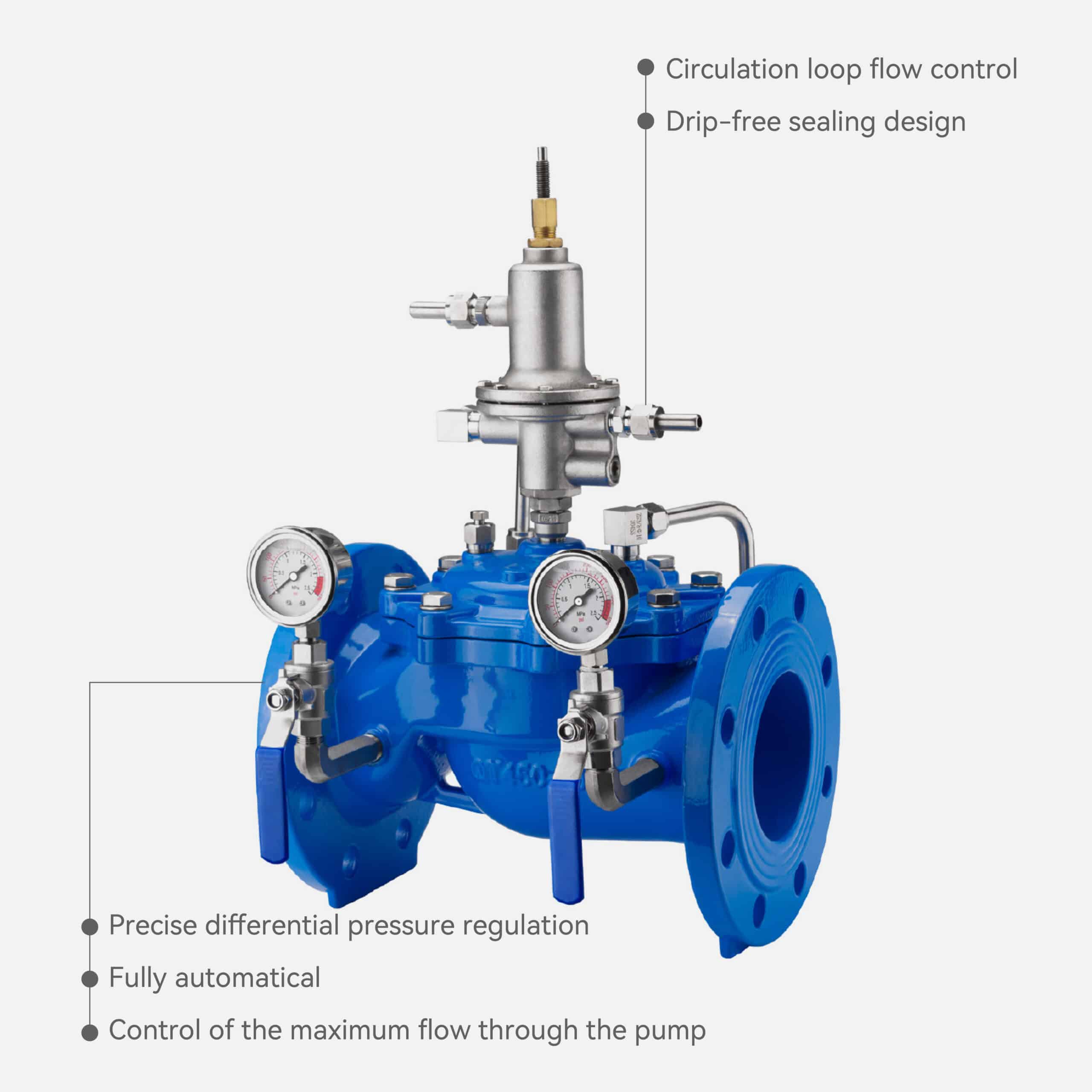
The Judberd Smart Pressure Management Valve is an intelligent hydraulic control valve that performs pressure reducing and flow regulating functions. It is suitable for applications that require stable downstream pressure and is ideal for areas that have a lot of leaks and for pressure management in a DMA (District Metered Area).
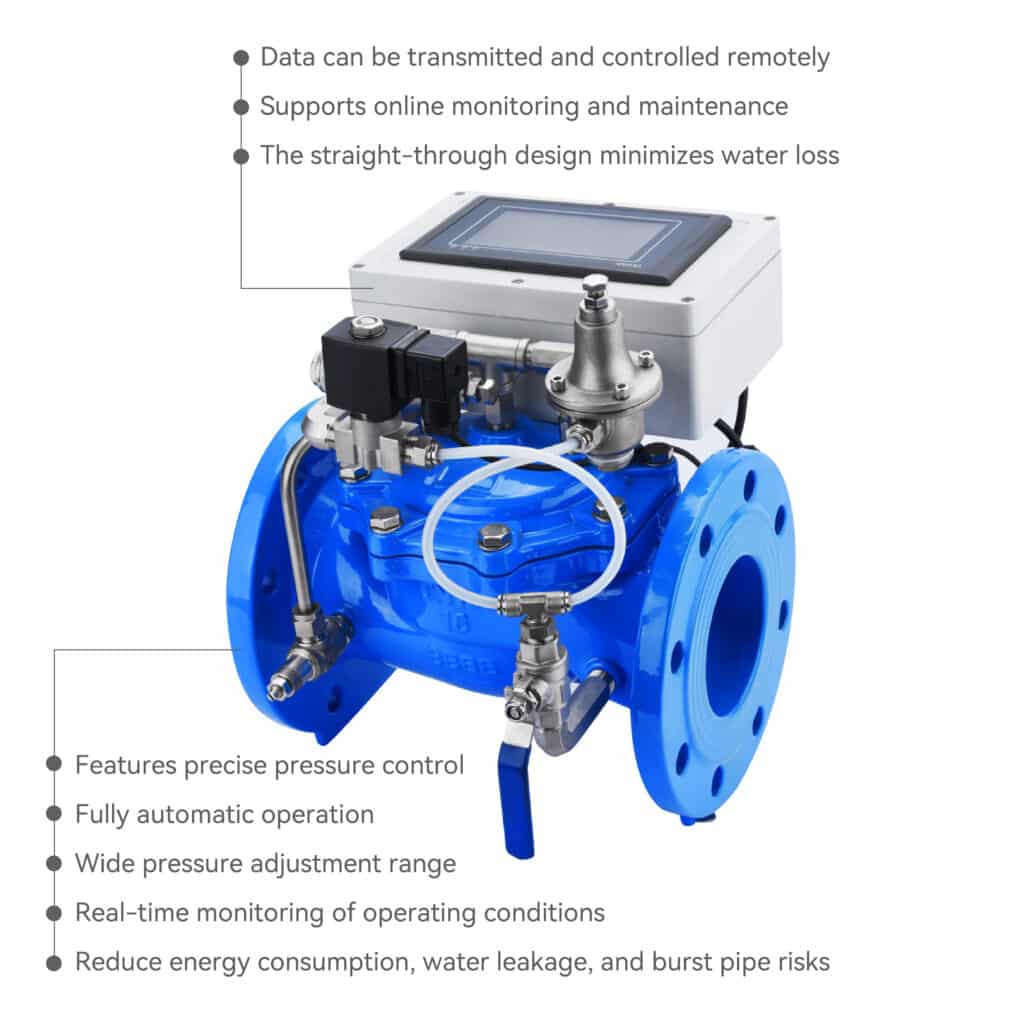
The system consists of six major components: the hydraulic main valve, a pressure-reducing pilot valve, a built-in lithium battery, a pressure sensor, a 4G IoT communication module, and an integrated control unit.
With advanced sensing, IoT communication, and autonomous control capability, it enables precise and reliable pressure management across water distribution networks.
Features
● Intelligent Pressure Control : The valve has a built-in pressure sensor that allows you to control pressure in a constant pressure mode, time-based pressure mode, and flow-based pressure mode to meet different network conditions.
● Real-Time Monitoring: The valve continuously monitors operating data, so you know what the system pressure is and how the system is performing.
● Data Transmission via 4G IoT: All operating data is transmitted in real time through the 4G network to the mobile or PC platform for remote management.
● Emergency Remote Operation: In an emergency, you can remotely command the valve to fully open or fully close to protect the system.
● Flow Control Capability: With an external flow meter, the system supports constant flow control and time-based flow control.
● Long-Life Built-In Battery: The valve is powered by a high-capacity lithium battery, so it operates independently without an external power supply.
● Burst Pipe Control: When connected to an electric actuator valve, the system can automatically trigger burst-pipe shutoff protection.
● Alarm & Safety Functions: The valve supports multiple alarm types. When an alarm is triggered, the device switches to online mode, so you can continue to remotely control and monitor the valve.
Technical Specifications
Size Range (DN Range)
_
DN50 – DN400 (standard), Larger diameters DN450 – DN800 available upon customization
Pressure Rating (Working Pressure)
_
PN10 / PN16 / PN25, Higher pressure ratings available for special applications
Communication Method
_
4G LTE (Standard), NB-IoT (optional), LoRa / LoRaWAN (optional), Supports real-time data upload, remote control, and remote parameter configuration.
Built-In Battery
_
High-capacity lithium battery, Battery life: 3–5 years (depending on reporting frequency), No external power supply required, Replaceable and maintenance-friendly
Control Accuracy
_
Pressure control accuracy: ±0.05–0.10 MPa, Flow accuracy (with external flow meter): depends on flow meter pulse or 4–20 mA precision, Fast response for dynamic network conditions
Operating Temperature
_
0°C to 80°C (standard hydraulic valve configuration), For colder climates, optional anti-freeze protection available.
Suitable Media
_
Potable water / clean water, Treated water, Non-corrosive liquids (For special media, customized materials are available.)
Valve Body Materials
_
Ductile Iron (DI) EN-GJS-450-10 — standard; Stainless Steel (SS304 / SS316) — optional; Bronze / Brass — optional for small sizes or corrosive environments
Coating: Fusion Bonded Epoxy (FBE) or epoxy powder coating, thickness 250–350 μm
Internal Components & Accessories
_
Main Valve ① Ductile iron body ② Stainless steel stem ③ Stainless steel seat & guide Reinforced diaphragm
Pilot System ① Pressure reducing pilot valve ② Copper or stainless steel control pipelines ③ Pressure sensor (factory-installed)
Controller Unit ① Industrial-grade housing (IP65 / IP67 optional) ② Built-in pressure sensor ③ 4G / NB-IoT communication module ④ Real-time clock for time-based control ⑤ Data storage for offline mode
Antenna ① High-gain 4G antenna ② Optional external extension antenna for valve pits
Control Modes Supported
_
Constant Pressure Control, Time-Based Pressure Control, Flow-Based Pressure Control, Constant Flow Control, Time-Based Flow Control, Manual / Remote Full Open / Full Close and automatic Burst-Pipe Shutoff are available.
Data & Monitoring
_
Downstream pressure (real-time), valve opening percentage, battery level, communication status, alarm log (overpressure, low battery, burst pipe, sensor fault) and flow data (if external meter is connected) are available.
Installation Requirements
_
Upstream should have shut-off valve + filter
Downstream should have shut-off valve
Flow meter connection via pulse or 4–20 mA signal
No external power or wiring required
Key Functions
Constant Pressure Control
_
Maintains a stable downstream pressure regardless of upstream fluctuations or demand changes, ensuring continuous and reliable supply.
Time-Based Pressure Control
_
Automatically adjusts downstream pressure according to preset time schedules (day/night mode) to reduce leakage and prevent excessive nighttime pressure.
Flow-Based Pressure Control
_
Modulates pressure based on real-time flow conditions, allowing the system to reduce pressure when flow drops, improving leakage control and network efficiency.
Constant Flow Control
_
Ensures a fixed and stable flow rate when connected to an external flow meter, suitable for areas requiring controlled supply or flow balancing.
Time-Based Flow Control
_
Allows flow to be adjusted according to time intervals, supporting demand management in DMA zones or areas with variable consumption patterns.
Real-Time Data Monitoring
_
Allows flow to be adjusted according to time intervals, supporting demand management in DMA zones or areas with variable consumption patterns.
4G / NB-IoT / LoRa Wireless Transmission
_
Transmits real-time data to cloud platforms, mobile apps, or SCADA systems through secure wireless networks for remote monitoring and management.
Automatic Burst-Pipe Shutoff
_
When abnormal pressure drop or high flow is detected, the system can automatically close the associated electric valve to prevent flooding and reduce water loss.
Remote Full-Open / Full-Close Operation
_
Operators can remotely command the valve to fully open or close during emergencies, maintenance, or network optimization.
Remote Parameter Configuration
_
Pressure setpoints, time schedules, flow thresholds, alarm limits, and control modes can all be adjusted remotely without on-site intervention.
Judberd’s Smart Pressure Management Valve provides a complete suite of intelligent functions—pressure control, flow regulation, IoT connectivity, remote operation, safety protection, and autonomous management—making it ideal for DMA management, leakage reduction, and modern smart water network applications.
Application
The Judberd Smart Pressure Management Valve is engineered to solve the most critical issues faced by modern water distribution networks. By integrating hydraulic control, intelligent pressure regulation, real-time sensing, and IoT communication, it delivers solutions that traditional PRVs and mechanical pilot valves cannot achieve.
1, Excessive Nighttime Pressure Leading to Severe Leakage
_
During low-demand hours, upstream pressure remains high, accelerating leakage and stressing pipelines.
The valve solves it by automatically reduces pressure at night with time-based pressure control, dynamically adjusts pressure according to real-time flow using flow-based pressure control, significantly reduces leakage (NRW) and extends pipeline service life.
2, Unstable Pressure in DMA Zones
_
Different district zones have fluctuating consumption, making it difficult to maintain stable pressure.
The valves solve it by maintains stable downstream pressure using constant pressure control, adapts automatically to changing conditions based on monitored data, ensures consistent and reliable supply across DMAs
3, High Operational Cost Due to Manual Adjustments
_
Conventional PRVs require technicians to travel frequently for on-site pressure adjustments.
The valve solve it by supports remote pressure adjustment via 4G / NB-IoT / LoRa, eliminates repeated field visits, reducing labor and operational costs, enables centralized pressure management from a control center or mobile phone
4, Frequent Pipe Bursts Caused by Overpressure or Pressure Surges
_
Sudden pressure changes or excessive pressure can result in costly pipe failures.
The valve solve it by automatically lowers pressure during low-demand periods, detects abnormal conditions and activates automatic burst-pipe shutoff, dramatically reduces burst incidents and improves network safety
5, No SCADA System for Remote Monitoring and Control
_
Many water suppliers lack a full SCADA infrastructure.
The valve solve it by equipped with a built-in 4G IoT communication module, requires no SCADA—fully operational through mobile or PC platforms, provides real-time monitoring and remote control out of the box.
6, Limited Budget for Smart Water Projects
_
Traditional SCADA-based control systems are expensive and complex to deploy.
The valve will solve it by a cost-effective all-in-one smart PRV, operates independently using its own battery, sensors and controller, delivers essential smart-water functionality at a fraction of SCADA costs
Judberd Smart Pressure Management Valve can do the following
| User Requirement | Supported by Judberd Smart Pressure Management Valve? | Description |
|---|---|---|
| Automatically reduce pressure? | ✔ Yes | Through constant, time-based, and flow-based control modes |
| Control pressure based on time schedules? | ✔ Yes | Day/night mode and multi-period pressure profiles |
| Remote adjustment? | ✔ Yes | Pressure, flow, thresholds, alarms, and settings adjustable remotely |
| Remote open/close operation? | ✔ Yes | Full-open or full-close commands for emergencies and maintenance |
| Real-time monitoring? | ✔ Yes | Pressure, flow, battery, valve status, alarms |
| Reduce leakage? | ✔ Yes | Controlled nighttime pressure and continuous monitoring |
| Reduce pipe bursts? | ✔ Yes | Automatic pressure regulation + burst-pipe shutoff |
| Work without SCADA? | ✔ Yes | Built-in 4G / NB-IoT / LoRa connectivity |
The Judberd Smart Pressure Management Valve provides a comprehensive solution for reducing leakage, stabilizing DMA pressure, preventing pipe bursts, cutting operational costs, enabling remote control, and supporting smart water management initiatives—even where budgets are limited and SCADA systems are unavailable.
Adjustment
The Judberd Flow Control Valve is designed for simple and accurate flow adjustment.It does not require electricity, special tools, or advanced training.Follow the steps below to set the maximum flow safely and correctly.
Step 1 — Prepare the Piping System
1) Before installing the valve, you need to clean the pipeline, Flush the line to remove sand, rust, and debris.(This prevents blockage of the pilot valve and sensor.)
2) Install a shut-off valve and a filter upstream, Shut-off valve is used for stopping water during maintenance, Filter is used to protect the main valve and pilot from dirt, recommended order (from upstream to downstream) is Shut-off valve → Filter → Smart Pressure Management Valve → Shut-off valve
3) Check flow direction, you need Make sure the arrow on the main valve body matches the water flow direction.
Step 2 — Install the Main Valve
1) Place the valve into the pipeline between the two flanges.
2) Insert the bolts and tighten them evenly in a criss-cross pattern.
3) Make sure the valve is installed horizontally and not twisted.
4) Ensure all small control tubes and fittings on the valve are intact and not bent.
The valve is now physically installed.
Step 3 — Simply install the valve
The Judberd Smart Pressure Management Valve has a built-in lithium battery, so no need external power, simply install the valve — the controller powers itself.
Step 4 — Install the 4G Antenna
1) Take out the antenna from the accessories box.
2) Screw the antenna onto the antenna port on the controller.
3) Make sure the antenna is hand-tightened (do not over-tighten).
4) Position the antenna upright for best signal.
5) Keep it away from metal covers or underground pits to avoid signal blockage.
6) If the valve is installed in a chamber, ensure the antenna is placed near the chamber cover or on an extension cable.
Step 5 — Connecting an External Flow Meter (Optional)
If you plan to use flow-based control or flow monitoring:
Install the flow meter downstream or upstream according to the flow meter manufacturer’s instructions.
Locate the flow meter input port on the controller.
Connect the signal cable (usually pulse or 4–20 mA) to the port.
Tighten the cable gland to prevent water ingress.
In the controller settings, select:
“External Flow Meter → Enable”
Now the valve can perform constant flow control and time-based flow control.
Step 6 — Pressure Sensor Verification
The pressure sensor for downstream pressure is built-in, so you don’t need to install anything.
Just make sure the sensor cable is properly plugged into the controller.
Step 7 — Controller Start-Up
Press the power / wake-up button on the controller.
The screen will light up and show real-time pressure.
Set the parameters on the screen (or remotely) , include target downstream pressure, time schedule (day/night mode),
control mode (constant pressure, time-based, flow-based) and alarm limits.
If you are unsure, you can simply start with default settings, and Judberd can help you fine-tune later.
Step 8 — Remote Connection & Testing
The controller will automatically connect to the cloud through 4G.
Open the mobile app / PC platform.
Scan the valve’s QR code or enter its serial number.
You will see live data (pressure, flow, battery status).
Test remote commands full open, full close and adjust pressure.
If both remote and local operations work means installation is successful.
Step 9 — Final Checks
Before handing over the system,
please check all bolts and fittings,
check no leaks around the flanges,
Check filter is clean,
Check pressure is stable,
Check antenna signal strength,
Make sure shut-off valves are fully open after commissioning
To install the Judberd Smart Pressure Management Valve, you only need to ① Install shut-off valves and a filter ② Bolt the valve into the pipeline ③ Attach the 4G antenna ④ (Optional) Connect the flow meter cable ⑤ Press the controller power button ⑥ Set the pressure or control mode ⑦ Test remote operation ⑧ No external power. No complicated wiring. No SCADA required.
Anyone can install it by following these steps.
Troubleshooting
1, Why is the PRV slow to respond?
● Reasons
The filter is clogged → dirt is blocking water from getting to the pilot system.
The pressure sensor is slow to read.
The battery is low, so the signal is slow to process.
The control tubes or small orifices are clogged.
● Solution
Clean the filter upstream.
Make sure the PRV and control tubing are clear of debris.
Check the battery; replace it if it’s low.
Restart the controller to refresh the sensor readings.
2, Why is the downstream pressure bouncing around?
● Reasons
There’s air in the line causing the pressure to bounce around.
The pressure setting in the controller is wrong.
The water demand in the network is changing suddenly.
The filter or control tubing is blocked.
The pilot valve isn’t completely clean / is stuck.
● Solution
If you can, let the air out of the line.
Check the pressure setting in the controller again.
Clean the filter and pilot valve.
If you can’t stop the demand changes, switch to Time-based or Flow-based control mode to stabilize the pressure.
3, Why is the remote communication interrupted?
● Reasons
The 4G / NB-IoT signal is weak in the underground chamber or remote area.
The antenna isn’t pointing the right way.
The battery is low, so the transmission is affected.
The local telecom network is temporarily down.
● Solution
Make sure the antenna is pointing up and not covered by metal.
If you put it in the valve chamber, put the antenna near the chamber cover or use an extension cable.
Check the battery; replace it if you need to.
Wait for the network to come back; the controller will reconnect by itself.
4, How often do I need to replace the battery?
● General Rule
The battery lasts 3–5 years, depending on how often you send data.
Things that make the battery die faster
You send data a lot (e.g., you send data every minute).
The mobile signal is very weak (the controller tries harder to send data).
It’s very cold.
● Recommendations
Normal setting: send data every 5–10 minutes to balance battery life and monitoring accuracy.
Replace the battery when the controller gives you a “Low Battery” alarm.
5, Is the burst-pipe automatic shutoff reliable?
Yes, it’s reliable because the system watches the pressure and flow in real time.
● How it works
If the PRV sees the pressure drop suddenly or the flow go crazy,
The controller tells the electric actuator valve connected to it to close,
Which stops the water from running and reduces the damage.
● Things that could go wrong
The electric valve isn’t connected right.
The signal cable is loose.
The settings for the threshold (to detect a burst) aren’t right.
● Solutions
Check the wires between the smart controller and the electric valve.
Tighten the cable connections.
Adjust the burst detection threshold based on what’s really happening in your line.
6, Why is the pressure reading wrong?
● Reasons
The pressure sensor is loose.
There’s air stuck in the control chamber.
The sensor cable isn’t plugged in all the way.
● Solutions
Make sure all the sensor fittings are tight.
Turn the controller off and back on to refresh the readings.
Make sure there’s no air in the control lines.
7, Why won’t the PRV open or close all the way?
● Reasons
The shut-off valve upstream isn’t open all the way.
The pilot valve is blocked or stuck.
The control tubing is clogged.
● Solution
Open the shut-off valve upstream all the way.
Clean the pilot valve and control tubes.
Check the controller for any error messages.
Most problems are caused by a clogged filter, a weak signal or bad antenna position, a low battery, the wrong settings or Dirt in the pilot system.
In 80% of cases, cleaning the filter, checking the battery, and verifying the settings will fix the problem.
Price
Thank you for your interest in the Judberd Smart Pressure Management Valve.
The price of the Judberd Smart Pressure Management Valve depends on the configuration you choose.
The Judberd Smart Pressure Management Valve combines hydraulic control, sensors, wireless communication, and intelligent automation.
Here is a simple guide to help you understand how the pricing works.
1, How Much Does a Smart Pressure Management Valve Cost?
The price of the valve depends on the size (DN), material, and the level of smart functions you want.
For a standard configuration (DI body + 4G communication + built-in battery + pressure sensor), the typical price ranges are:
Size Typical Price Range (USD/Unit)
● DN100 USD 600 – 900
● DN150 USD 700 – 1,050
● DN200 USD 900 – 1,300
These are typical ranges. Your exact quote will depend on the configuration you want.
2, The 4G module, battery, and sensors increase the price, because they are the core of the smart system.
The smart package include 4G / NB-IoT / LoRa communication module, Industrial antenna, Built-in high-capacity lithium battery, Pressure sensor, Controller and cloud connectivity.These components make the valve perform better and allow remote control, Real-time monitoring, automatic pressure regulation and Alarms and data logging.Because of this, the smart version costs more than a traditional mechanical PRV.
3, Price is different between Pressure Control and Flow Control modes
Pressure Control only have standard smart configuration, flow Control (with external flow meter) have additional cost, because flow control requires external flow meter, signal cable (pulse or 4–20 mA) and additional control functions in the controller, This adds hardware and software costs, so the price is higher than pressure-only control.
4, Other factors that affect the price
● Valve Size (DN) Larger valves require more casting material, machining, assembly, and testing.
● Pressure Rating (PN10 / PN16 / PN25) Higher pressure ratings require thicker walls and stronger components.
● Material Options Ductile Iron (standard), Stainless Steel 304 / 316 (higher cost), Bronze (for corrosion-resistant applications)
● Communication Method 4G is standard; NB-IoT or LoRa may require customization.
● Extra Functions Burst-pipe automatic shutoff, High-accuracy sensors, Extended battery life, IP67 or higher waterproof housing, More advanced functions mean a higher cost.
● Coating and Corrosion Protection Standard epoxy is included, Marine coatings, NSF-approved coatings, or special linings cost extra.
● Quantity Bulk orders receive significantly better pricing.
● Testing & Certification If you request additional tests ( third-party inspection etc), this also affects the final price.
5, Smart valve is more expensive than a traditional PRV
A traditional mechanical PRV only provides basic pressure reduction.
The Judberd Smart Pressure Management Valve provides real-time pressure monitoring, automatic pressure control, time-based and flow-based control, 4G remote monitoring, remote open/close operation, Burst-pipe protection, Cloud data logging and Long-life battery system. It replaces manual adjustment, reduces leakage, lowers OPEX, and minimizes pipe bursts — often saving far more money than its cost.
The Judberd Smart Pressure Management Valve is priced according to size, material, and smart features.
DN100–DN200 typically ranges from USD 600–1,300 per unit.Smart components (4G, battery, sensors) and flow-control options add cost.
Price is influenced by DN size, PN rating, material, coating, communication type, and additional functions.
Despite being more expensive than a traditional PRV, the smart valve provides significant long-term savings through leakage reduction, remote control, and improved network safety.